


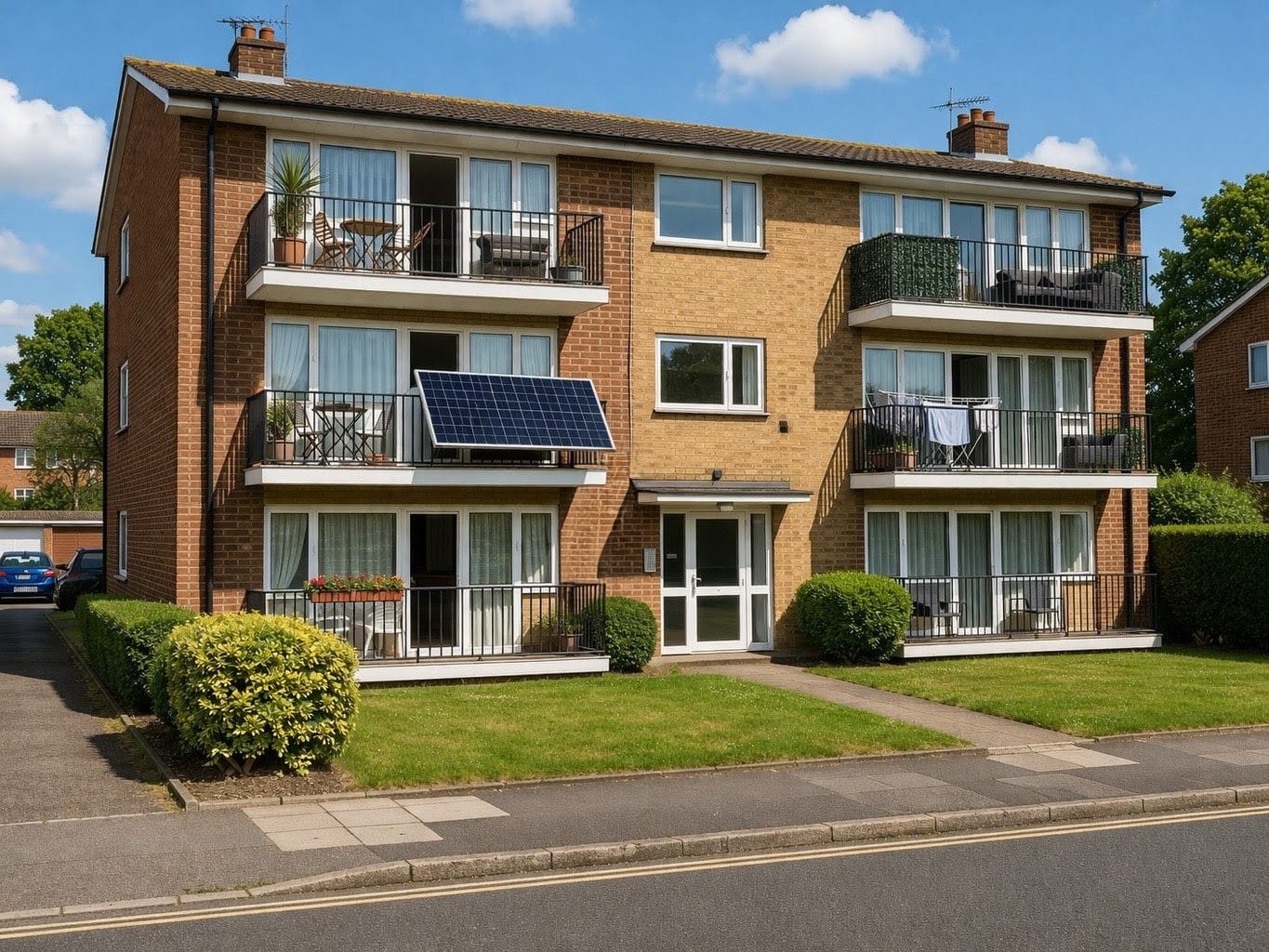
Today, the Government has published a press release, detailing plans for the rollout of “plug-in” solar panels (low-cost panels that families can put on their balconies or outdoor space) to be available in shops within months and save people money on their bills.
- “Plug-in” solar panels to be in shops within months, offering households chance to significantly cut energy bills
- Move comes as Government steps up drive for clean homegrown power to get the UK off dependency on fossil fuel markets
Retailers like Lidl and Amazon, alongside manufacturers such as EcoFlow, are working with Government to enable them to be brought to the UK market.
Plug-in solar is already widely used by households across Europe, with Germany seeing around half a million new devices plugged in per year.
The free solar power can be used directly through a mains socket like any other device, without an installation cost, thereby reducing the amount of electricity taken from the grid and cutting energy bills.
The easy-to-install technology could save many households significant amounts on their energy bills and help make the UK less reliant on global fossil fuel markets.
This is alongside new rules coming into force today implementing the Future Homes Standard, which includes common-sense measures to ensure the majority of new homes are built cheaper to run, with solar panels and clean heating as standard.
Energy Secretary Ed Miliband said:
Whether through solar panels fitted as standard on new homes or making it possible for people to purchase plug-in solar in shops, we are determined to roll out clean power so we can give our country energy sovereignty.”
Energy Projects Plus welcomes plans to help householders reduce their energy bills, and solar panels installed in the right location can knock hundreds of pounds off annual costs.
The prime location for a solar panel sees it facing South, with no shading (e.g. from nearby trees or other buildings). Modern solar panels can work when facing any direction, but the amount of energy generated will be less.
When well positioned, a solar panel could be expected to generate roughly 1,000 hours of its peak input per year. Therefore an 800W solar panel (the largest that would be available as a plug-in) could generate 800kWh per year. At today’s rate of 26p per kWh, this panel could save £208 over a year. Upfront costs are expected to be around £450, so the panel could pay for itself within 3 years.
You can learn more about residential energy demand, and managing your energy bills by calling our Save Energy Advice Line free on 0800 043 0151, or emailing us at advice@epplus.org.