


We’re pleased to share that our website now includes the Recite Me accessibility toolbar. This addition ensures that every website visitor, regardless of their individual needs, can browse, engage, and access our content more easily.
Breaking Down Barriers Online
With an estimated 1 in 4 people facing challenges online due to disabilities, learning differences, visual impairments, or language barriers, accessibility is no longer optional; it’s essential.
This new feature helps make our website more accessible to more people. The toolbar allows visitors to personalise how they view and interact with our website, making it easier for people with a range of accessibility needs to access information and support.
By simply clicking the accessibility icon (the stick figure) on any page, the Recite Me toolbar will appear. From there, users can choose from a variety of helpful tools, including the ability to translate content into different languages, have text read aloud, and adjust the size, style, and colour of text.
There are also features to change colour contrast, enlarge the cursor, and highlight text as it’s being read, which can be particularly helpful for people with visual impairments, dyslexia, or other accessibility needs.
At Energy Projects Plus, we believe inclusion isn’t optional; it’s essential. By adding the Recite Me toolbar, we’re helping make our website more accessible so more people can get the information and support they need.

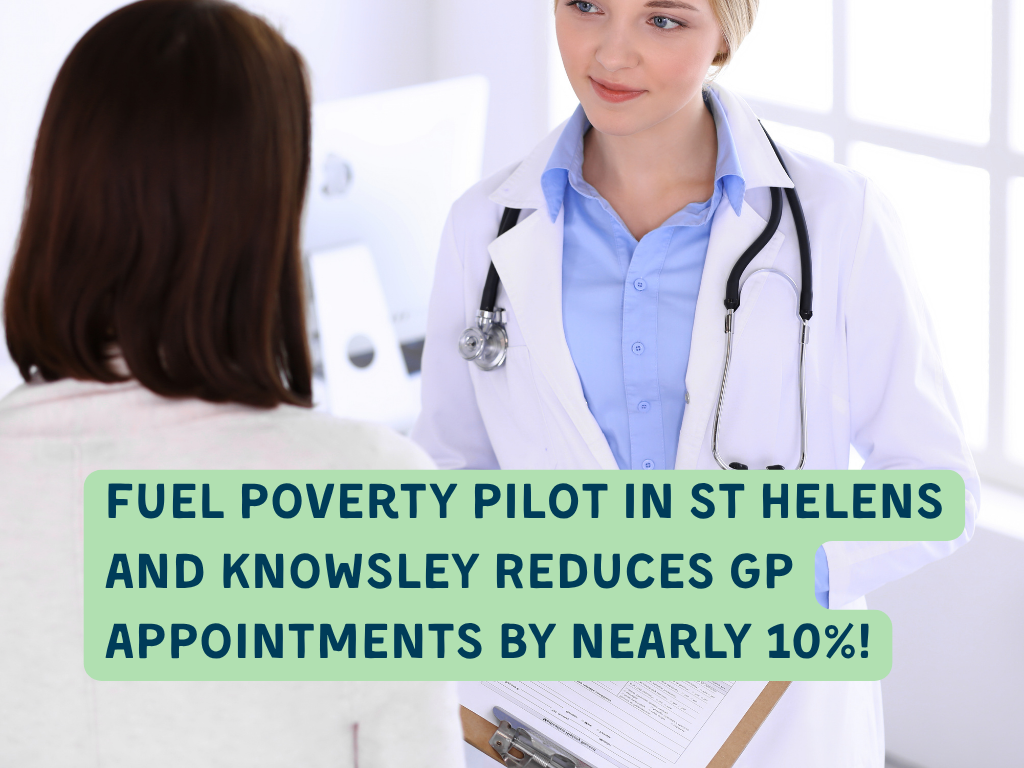
We’re pleased to have supported a recent fuel poverty programme, led by St. Helens Council and Mersey and West Lancashire Teaching Hospitals NHS Trust. Their pilot project offered interventions to help make homes warmer through Winter, to patients with chronic health conditions made worse by cold.
We’re delighted to announce that this pilot has now published findings, showing a near 10% reduction in GP appointments following targeted energy advice and support!
The project focused on vulnerable adults, targeting those with chronic obstructive pulmonary disease (COPD) in St Helens and Knowsley. Using the Combined Intelligence for Population Health Action (CIPHA) system, the programme identified people most at risk and offered a holistic package of support, including medicines optimisation, pulmonary rehabilitation referrals, tobacco dependency support, and help with finances. Nearly 700 people have benefited from the scheme so far, demonstrating how practical energy and health support can improve wellbeing and reduce pressure on GP services.
As part of the pilot, energy advice and support was provided to vulnerable adults identified through the programme. This included home visits to assess how their homes could be made more energy-efficient, practical advice on reducing energy usage, and guidance on available funding or support. Through these referrals, participants could access the support they needed to stay warm, healthy, and reduce their energy costs.
Rhiannon Clarke, Senior Programme Manager at Health Innovation North West Coast, said:
“These results are fantastic, and they validate everything we’ve been doing. They show how well the scheme has not only supported people with COPD but also relieved some of the pressures on the healthcare system.
“We knew that an innovative scheme such as this could make the most of the knowledge and expertise we have in the region and target support to those who were most in need”.
You can read more about it here!
This is a strong example of how energy advice and health support go hand in hand, and has led to more health & housing fuel poverty pilots being established across the footprint of NHS Cheshire & Merseyside. If you work for a health team in Cheshire, Merseyside, or West Lancashire, and are interested in learning about the support and advice Energy Projects Plus can provide to your patients, please email dominic.griffiths@epplus.org to find out more.

With the government’s Warm Homes Plan placing greater emphasis on clean energy and reducing reliance on fossil fuels, there’s a clear and positive shift towards electrification.
We’re seeing increasing numbers of air source heat pumps, electric boilers, and storage heaters being installed in homes across the UK. But as this transition gathers pace, we’re beginning to notice a growing challenge that needs more attention:
What happens after installation?
Over the past few months, we’ve supported a number of clients experiencing issues with installed electric heating systems. From faults with air source heat pumps to problems with electric boilers and storage heaters, the common theme has been the same: finding someone to service, repair, or support these systems has been incredibly difficult.
In one case, an 80-year-old resident had an air source heat pump (ASHP) installed through a government scheme in 2023. The installer’s warranty ended in May 2025, and just a few months later, a fault developed, leaving the resident with no heat. As the installer’s warranty had expired, the original installer was unwilling to provide further support. The resident had phoned a number of ASHP installers, none of whom would assist him. After considerable research, we were able to find and persuade a local heat pump installer to undertake a service and hopefully solve the issue.
In a similar case, a client with a relatively new electric boiler, broken and leaving the client and young child with no heat, had been unable to find an engineer to carry out repairs despite reaching out to the manufacturer and local installers. After researching and ringing around unsuccessfully ourselves, through our links, we were able to arrange for a local gas heating engineer with limited experience of electric boilers to “go the extra mile” and visit. After troubleshooting with an engineer elsewhere in the country, the fault was diagnosed and heating restored.
These are not isolated incidents.
While the move towards cleaner, electric heating is absolutely the right direction, it raises an important question:
Do we currently have the infrastructure, skills, and support systems in place to maintain what we’re installing?
Without the right aftercare: servicing, repairs, advice, and skilled engineers – there is a real risk that residents, particularly those who are older or vulnerable, could be left struggling with systems they don’t fully understand and can’t easily get fixed.
At Energy Projects Plus, we’re increasingly being asked for help in these situations and we’re finding that solutions aren’t always easy to come by.
So we want to open up the conversation.
- Are others seeing similar issues?
- Are there networks, providers, or solutions we’re not aware of?
- How do we ensure that alongside installation, there is a long-term plan for support and maintenance?
If you have insights, experience, or can help point us (and the residents we support) in the right direction, we’d really welcome the conversation. Please email info@epplus.org.
Let’s work together to ensure the electric dream doesn’t become a nightmare for the people it’s meant to help.
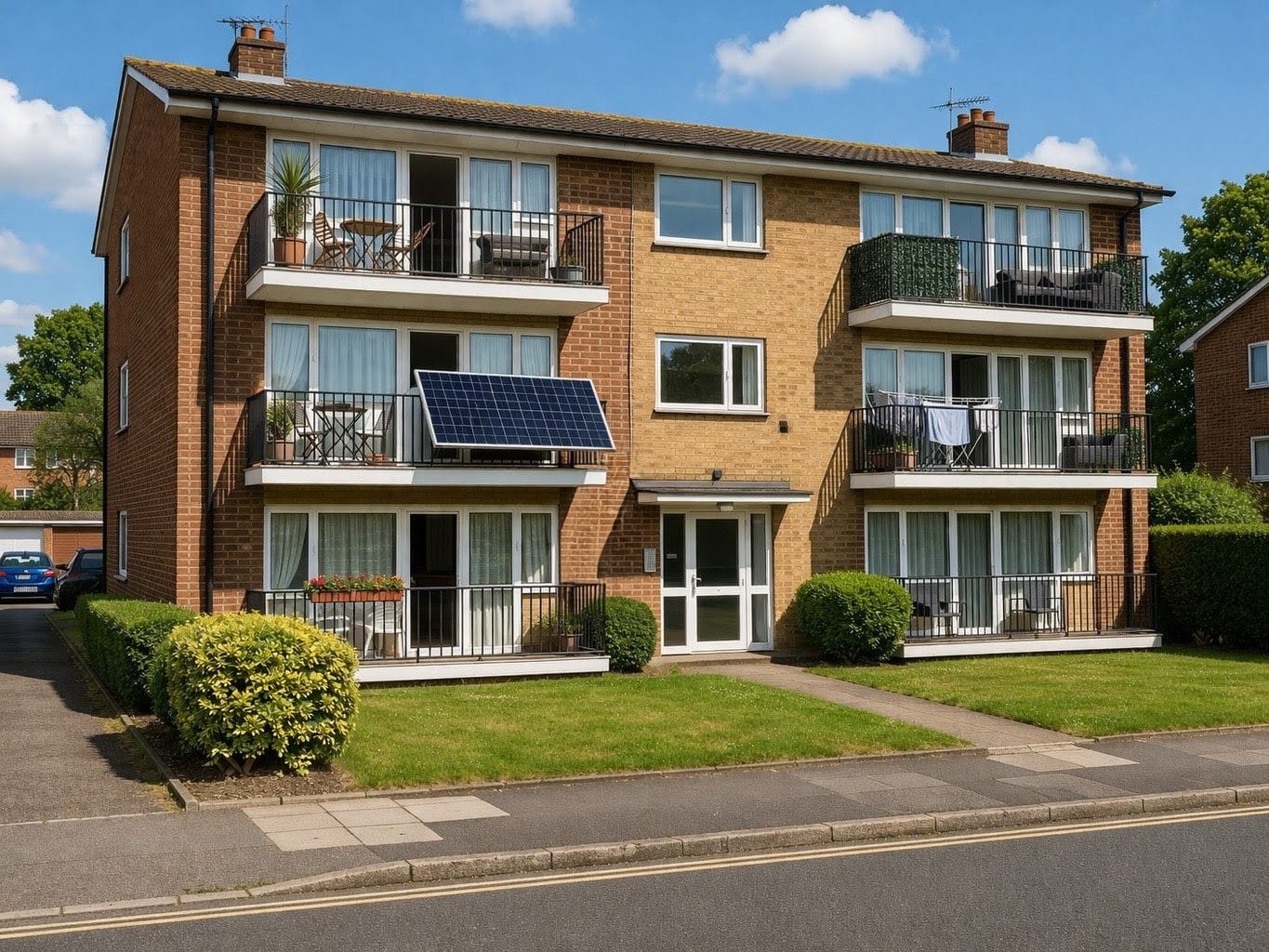
Today, the Government has published a press release, detailing plans for the rollout of “plug-in” solar panels (low-cost panels that families can put on their balconies or outdoor space) to be available in shops within months and save people money on their bills. In it they say:
- “Plug-in” solar panels to be in shops within months, offering households chance to significantly cut energy bills.
- “Move comes as Government steps up drive for clean homegrown power to get the UK off dependency on fossil fuel markets.
“Retailers like Lidl and Iceland, alongside manufacturers such as EcoFlow, are working with Government to enable them to be brought to the UK market.
“Plug-in solar is already widely used by households across Europe, with Germany seeing around half a million new devices plugged in per year.
“The free solar power can be used directly through a mains socket like any other device, without an installation cost, thereby reducing the amount of electricity taken from the grid and cutting energy bills.
“The easy-to-install technology could save many households significant amounts on their energy bills and help make the UK less reliant on global fossil fuel markets.
“This is alongside new rules coming into force today implementing the Future Homes Standard, which includes common-sense measures to ensure the majority of new homes are built cheaper to run, with solar panels and clean heating as standard.”
Energy Secretary Ed Miliband said:
“Whether through solar panels fitted as standard on new homes or making it possible for people to purchase plug-in solar in shops, we are determined to roll out clean power so we can give our country energy sovereignty.”
Energy Projects Plus welcomes plans to help householders reduce their energy bills, and right-sized solar panels installed in the right location can knock hundreds of pounds off annual costs.
The prime location for a solar panel sees it facing South, with no shading (e.g. from nearby trees or other buildings). Modern solar panels can work when facing other directions, but the amount of energy generated will be less.
When well positioned, a solar panel could be expected to generate roughly 1,000 hours of its peak input per year. Therefore an 800W solar panel (the largest that would be available as a plug-in) could generate 800kWh per year. At today’s rate of 26p per kWh, this panel could save £208 over a year if all the generated electricity is used instead of mains electricity. Upfront costs are expected to be around £450, so the panel could pay for itself within 3 years.
You can learn more about residential energy demand, and managing your energy bills by calling our Save Energy Advice Line free on 0800 043 0151, or emailing us at advice@epplus.org.
OFGEM (the government’s Office for Gas and Electricity Markets) has today provided the following information on how the situation in the Middle East could affect wholesale energy costs and bills:
“We know that the ongoing conflict in the Middle East is concerning. Our thoughts are with everyone affected, and we understand why many households will be worried about what this could mean for energy prices in Great Britain (England, Scotland and Wales).
“Global energy markets are closely connected, and international events can affect wholesale gas and electricity prices. However, it is important to be clear about what this means for consumers right now. In the short term, households on standard variable tariffs are protected by the energy price cap until the end of June. This means suppliers cannot charge more than the cap allows, even if wholesale prices rise during this period.
“The situation is still developing, and it is too early to know how long-lasting any market impacts may be. While the UK’s energy supplies remain secure, sustained disruption to global gas markets could put pressure on prices in future price cap periods. Ofgem continues to closely monitor developments and works with government, industry and system operators to protect consumers.
“For now, there are practical steps consumers can take:
- If you are on a standard variable tariff, the price cap means your unit rates and standing charges are protected until the end of June.
- If you are on a fixed deal, your prices will not change for the length of your contract.
- If you are worried about bills, contact your supplier early – they must offer support, including payment plans or help if you are struggling.
- Simple actions such as submitting regular meter readings, checking you are on the best tariff for you, and reducing energy use where possible can also help.
“Our priority remains protecting consumers and ensuring the energy system continues to work for households across Great Britain.”
You can read OFGEM’s press release here: https://www.ofgem.gov.uk/news/what-situation-middle-east-means-your-energy-bills
In their 45th anniversary year, National Energy Action invited delegates from around the country, to their hometown of Newcastle, for this year’s National Fuel Poverty Conference. Our Dominic Griffiths represented Energy Projects Plus, and shares his notes here.
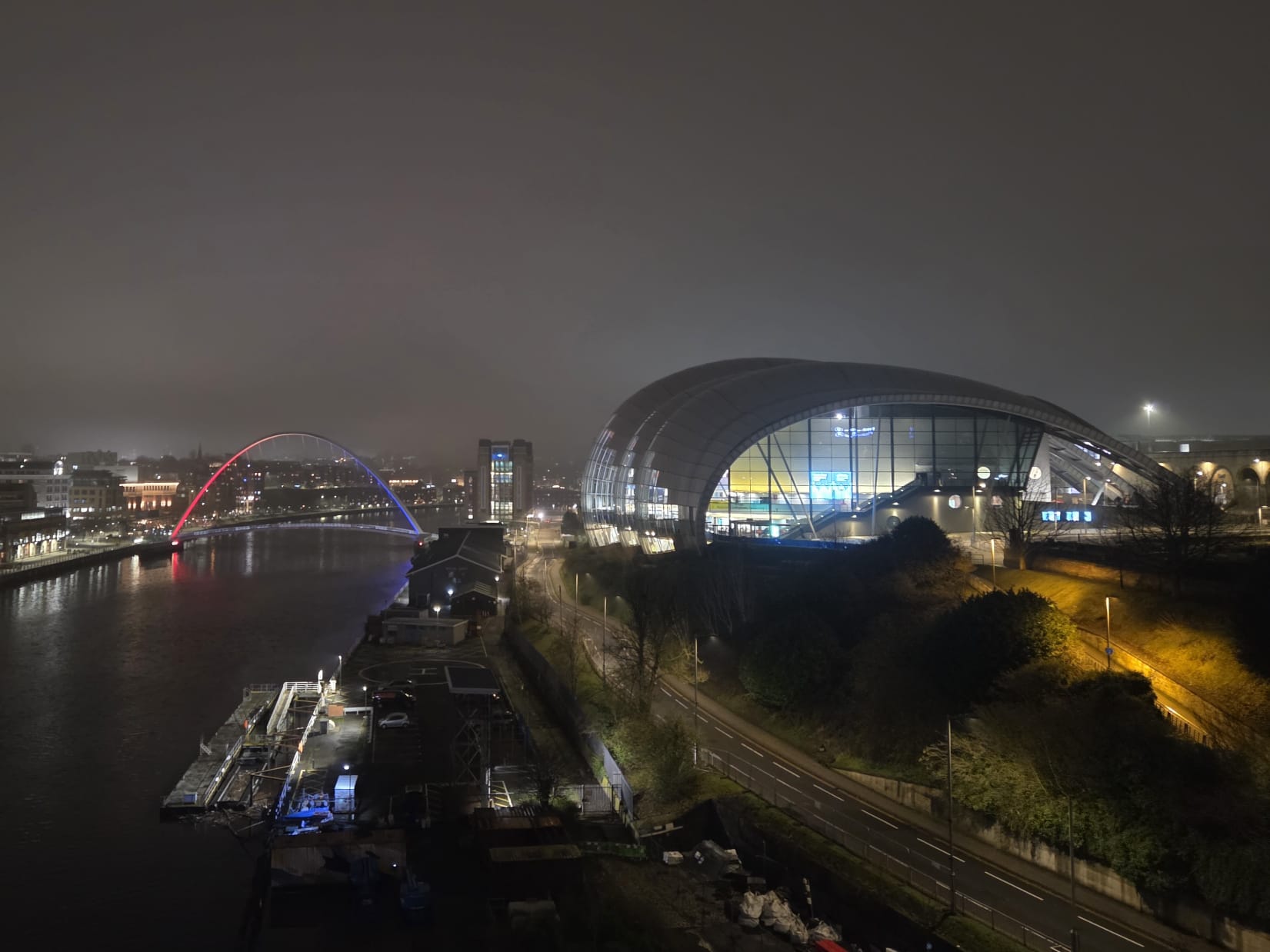 The Glasshouse International Centre for Music strikes an imposing figure on the bank of the Tyne. I’ve passed it a few times over the years, but hadn’t realised how massive it was inside. And it needed to be; with 450 delegates, speakers, and exhibitors over 3 days, this is NEA’s largest ever conference. Though, technically, it’s actually located in Gateshead, and not Newcastle (several of the local attendees were keen to point out this fact over the course of the conference).
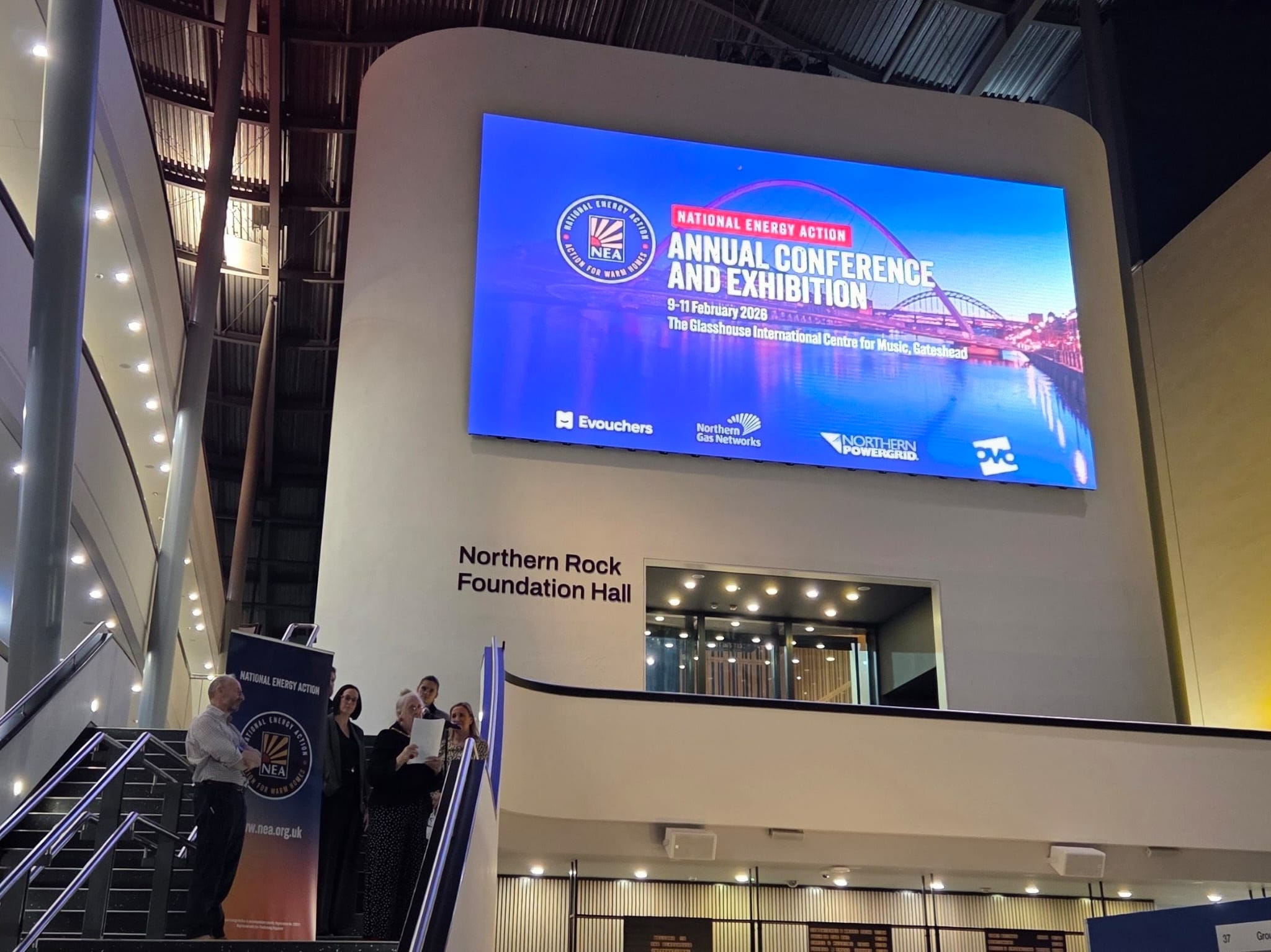 Monday evening saw the Exhibition opened officially by the Mayor of Gateshead, Councillor Freda Geddes, alongside NEA’s Chief Executive Adam Scorer, and representatives from the Conference sponsors, Evouchers, Northern Gas Networks, Northern Powergrid, and OVO. I was glad of the opportunity to catch up with friends, including Charis Grants, Christians Against Poverty, and LEAP (Local Energy Advice Partnership), who were exhibiting for the duration of the conference.
Tuesday morning overview
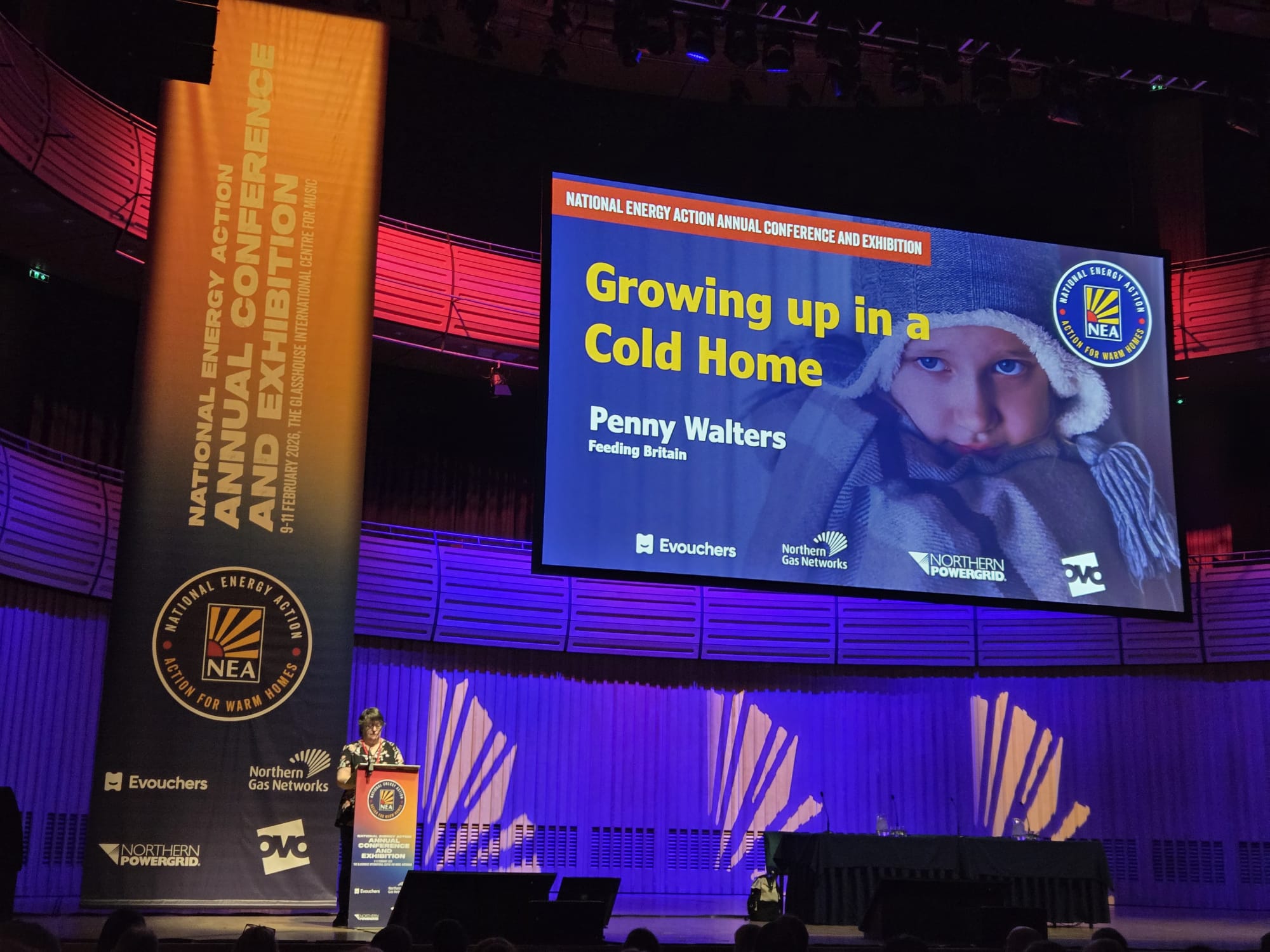 |
09:35-09:45 Spotlight on: Growing up in a cold home Penny Walters from Feeding Britain, opened the conference with a reading of her poem, Voice, urging us to use our voices, to speak up for those without a voice. |
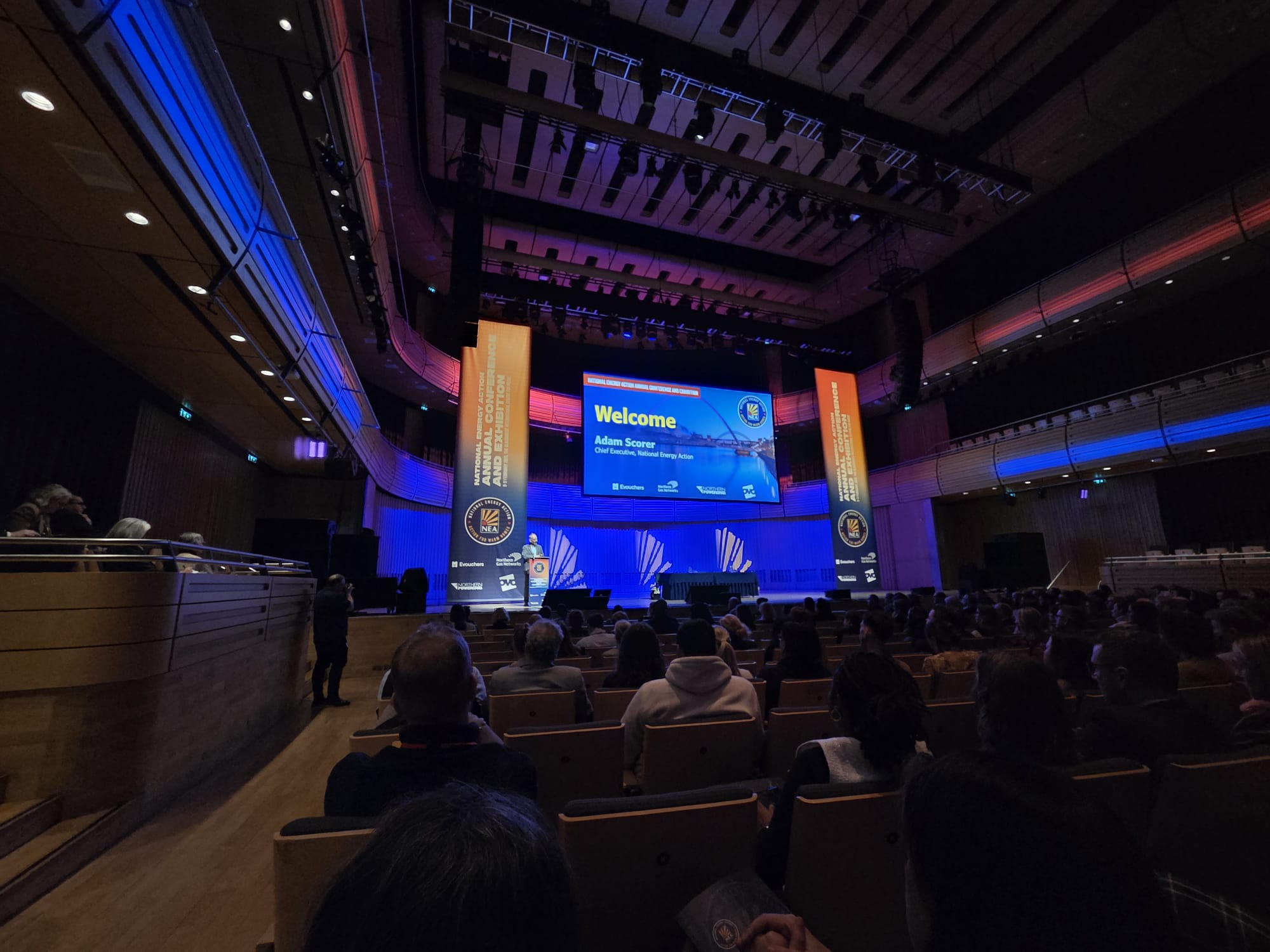 |
09:45-10:15 Welcome address and reflections NEA Chief Executive, Adam Scorer, took to the stage to welcome us, and highlight the power of lived experience, such as that of Penny Walters. Adam says ‘lived experience doesn’t just inform what we do, it defines what we do.’ |
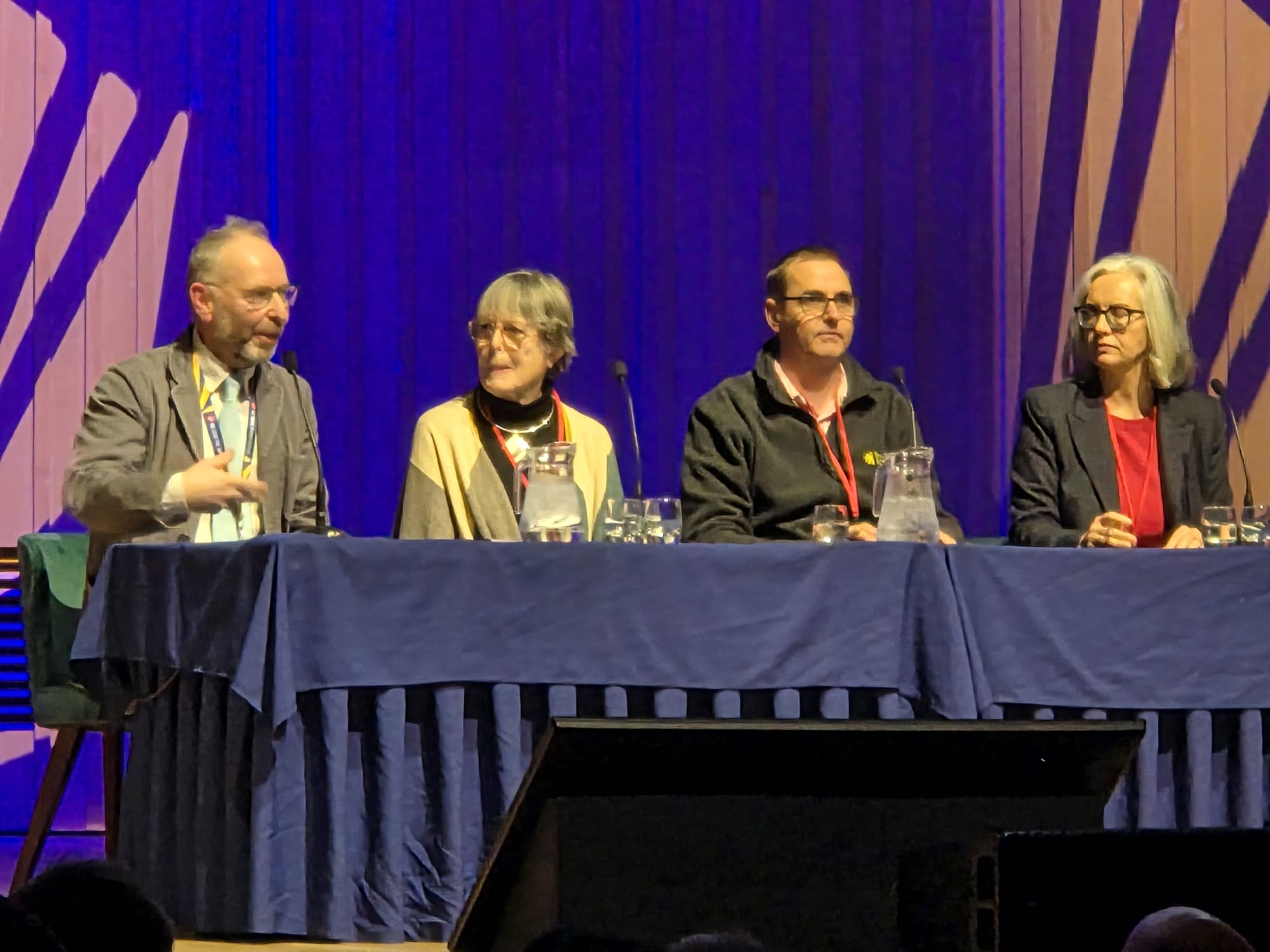 |
10:15-10:40 45 years of fighting fuel poverty Dr. Brenda Boardman literally defined fuel poverty in her 1991 book, “Fuel Poverty: From Cold Homes to Affordable Warmth” in which she stated fuel poverty exists where a household has to spend more than 10% of their income to keep warm. While other definitions of fuel poverty have existed since this time, she states hers remains the only definition that can be used on the doorstep. In thinking back over the past 45 years, she said “fuel poverty was bad in 1980 and unrecognised. Fuel poverty is bad now, but at least it is recognised.” Ian Preston of CSE declared area-based action is needed to continue the fight against fuel poverty: National advice isn’t enough. |
|
|
11.15-11.25 Spotlight on: Community Retrofit Hubs NEA manages several Community Retrofit Hubs, and their Home Retrofit Consultant Aisling McGovern provided an overview of the barriers and successes, highlighting how little knowledge there is in the community about retrofit measures, the length of time it takes to engage with residents, build trust, and get contractors to deliver the work, often with tight deadlines due to stop-start funding streams. Aisling stressed the requirement of local energy advice experts to hold the hand of residents, through the journey and beyond. |
|
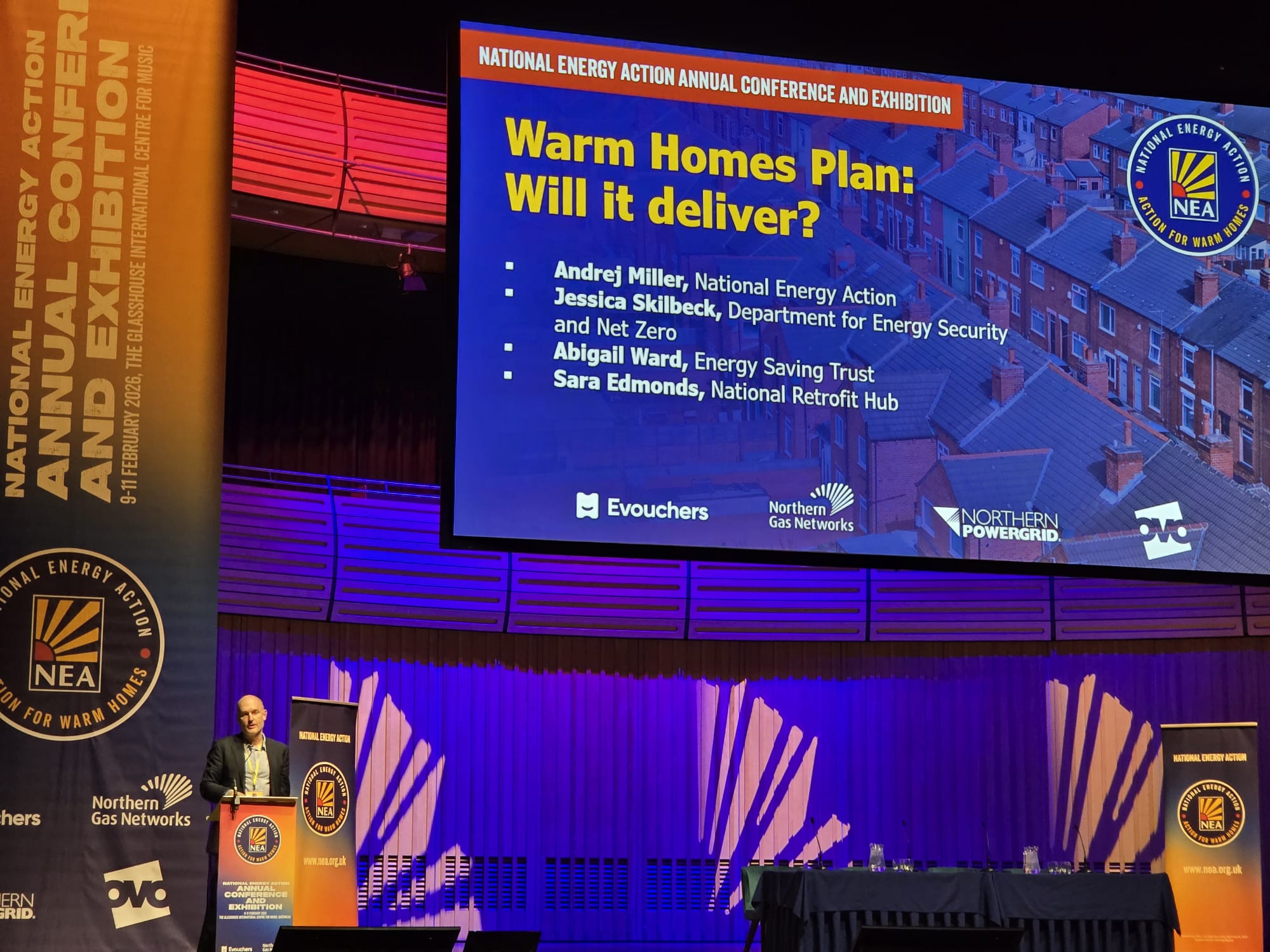
11.25-12.30 Warm Homes Plan – will it deliver? |
|
|
|
NEA’s Andrej Miller introduced a topic that most of us in the room were particularly keen to hear about, as the Warm Homes Plan had only recently been published, and there were several notable gaps in the plan, including details around the financial support for residents deemed “able to pay” by government, and also whether there’s any room for we assembled energy advisors within the £15bn programme. |
|
|
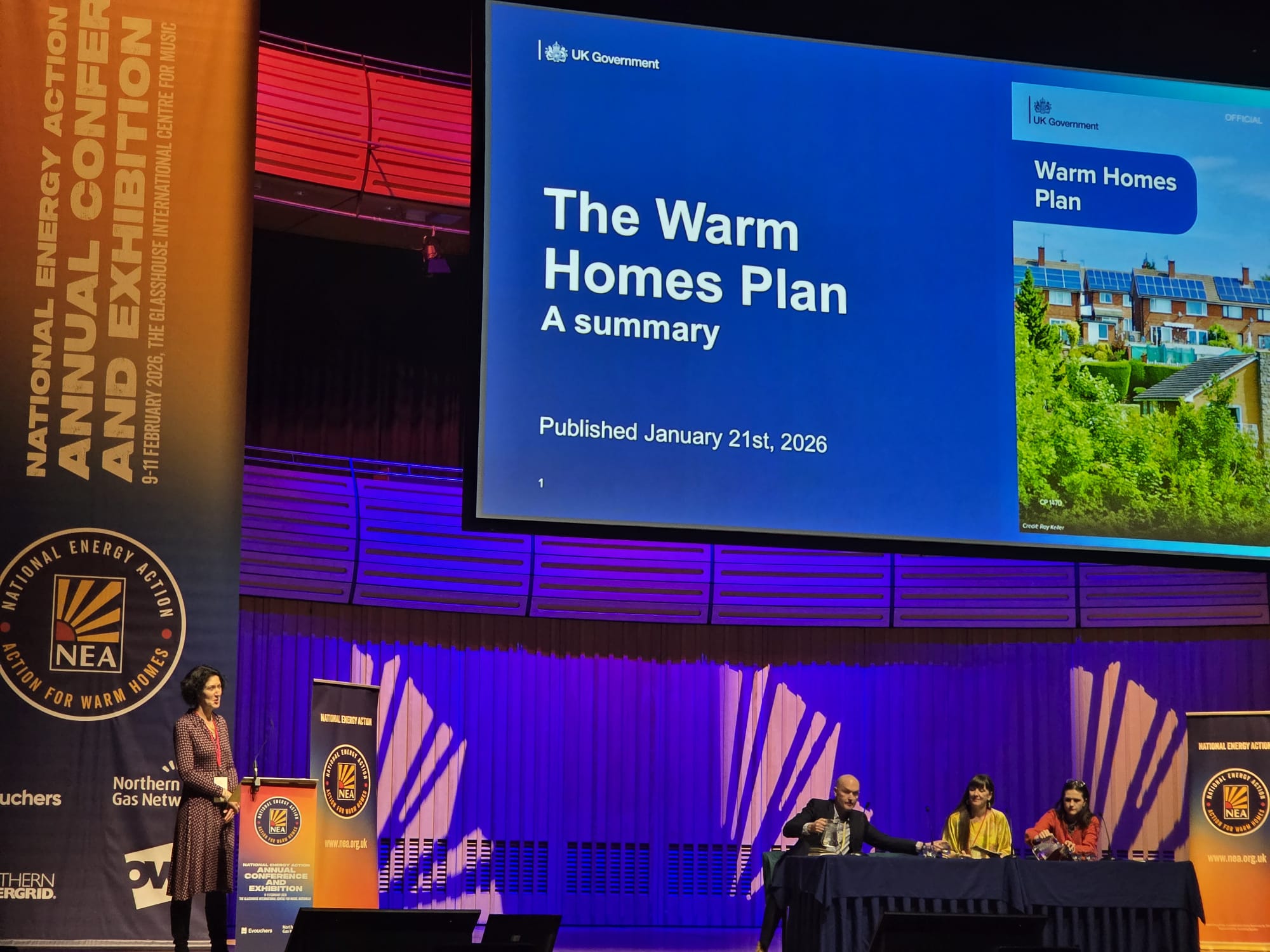
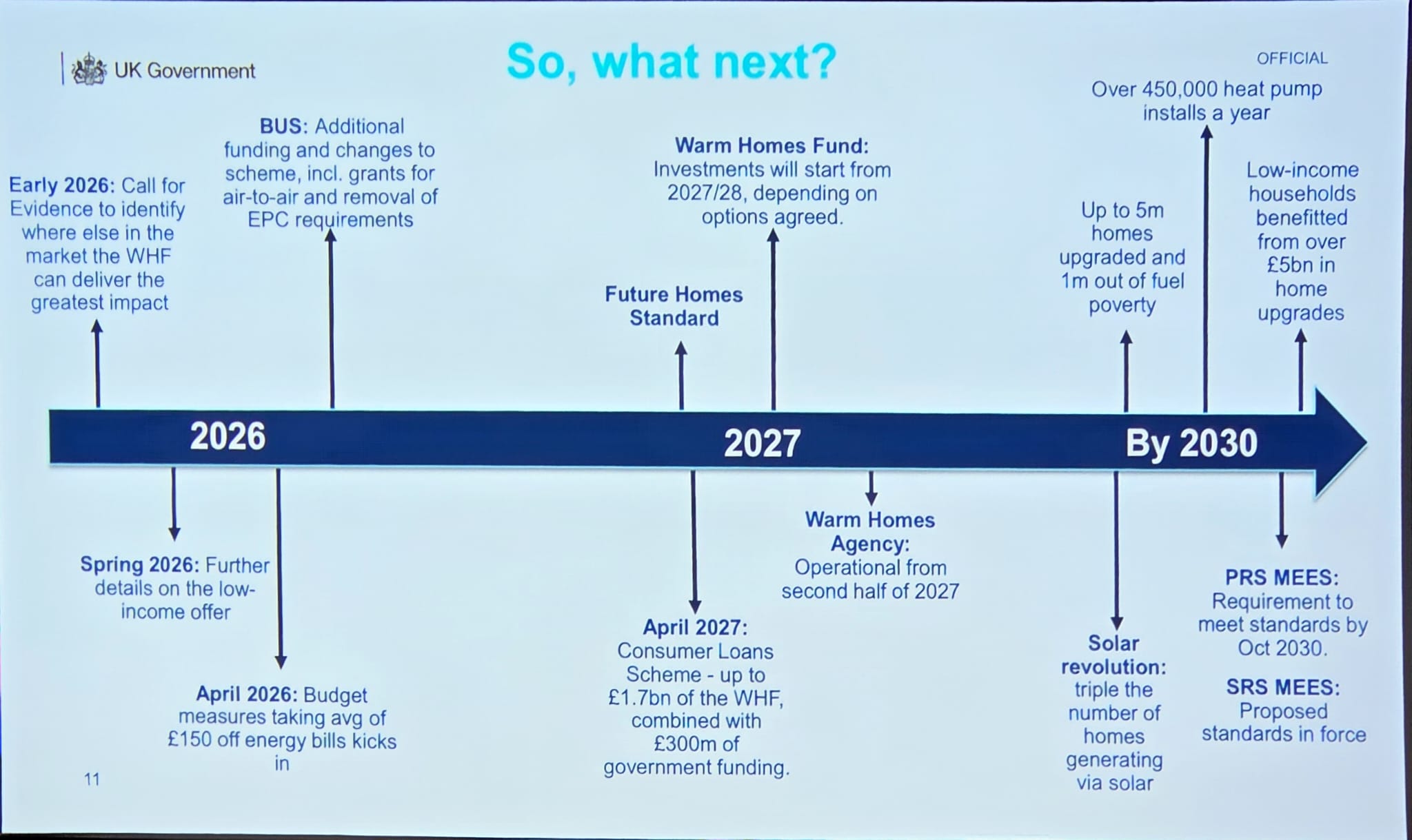
Jessica Skilbeck from Department for Energy Security and Net Zero, provided an executive summary of the plan, as well as some of the “next steps” including when we might see funding for air-to-air heat pumps
There were many fears in the room that government’s declared “Warm Homes Agency” would try to replicate all of our work, from a central location nationally, which would be helpful only to those few people who. Jessica tried to allay these fears, by stating that the Warm Homes Agency is only intended to bring together the advice currently offered by DESNZ, OFGEM, and Salix, to save some money, and ensure there’s a single message from government around retrofit. |
|
|
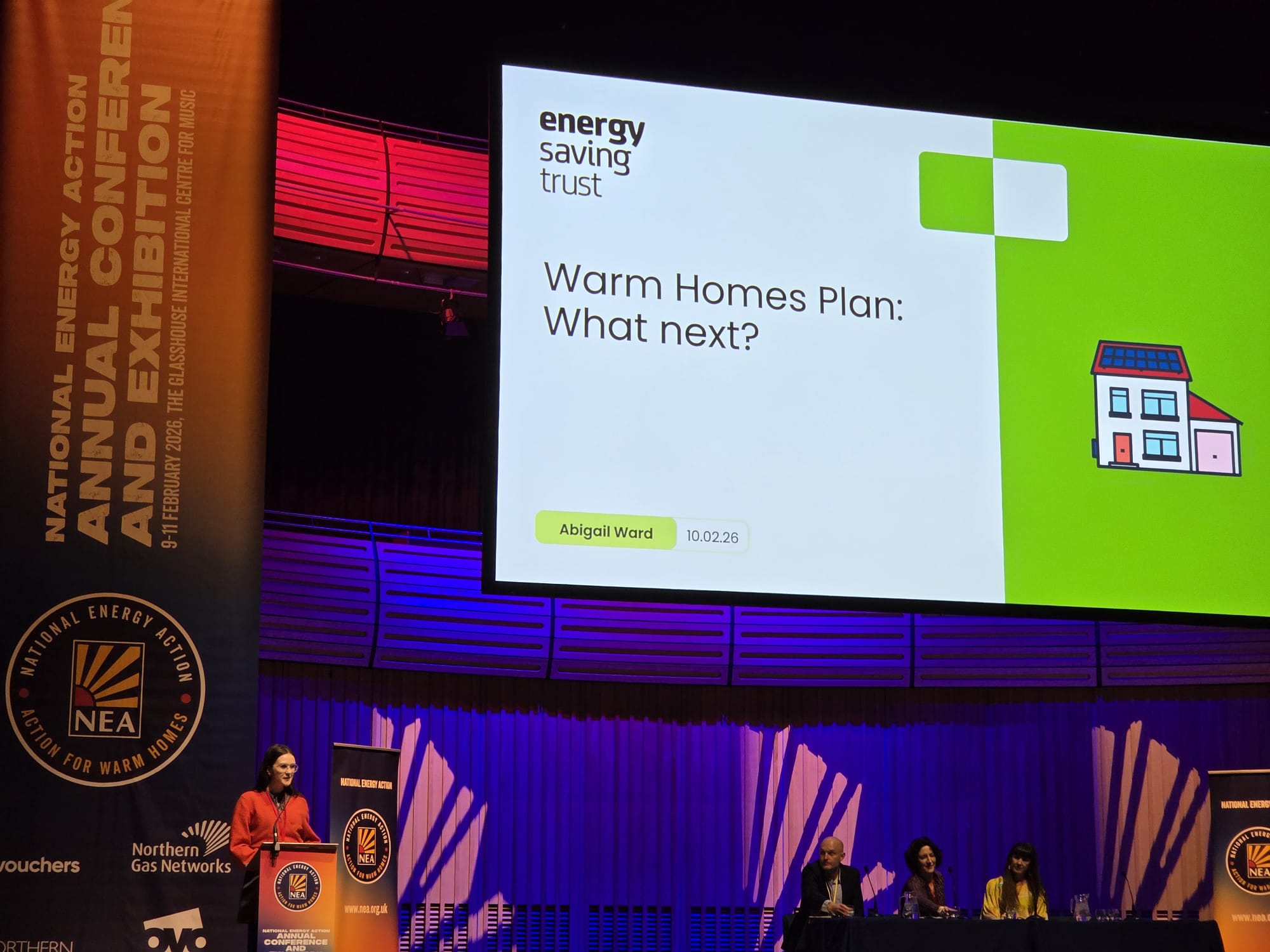
Abigail Ward from Energy Saving Trust was keen to point out that local energy advice is required, and suggested a single national telephone number could be promoted, that diverts callers to a local agency who can provide expert advice and support. We remember delivering |
Tuesday afternoon overview
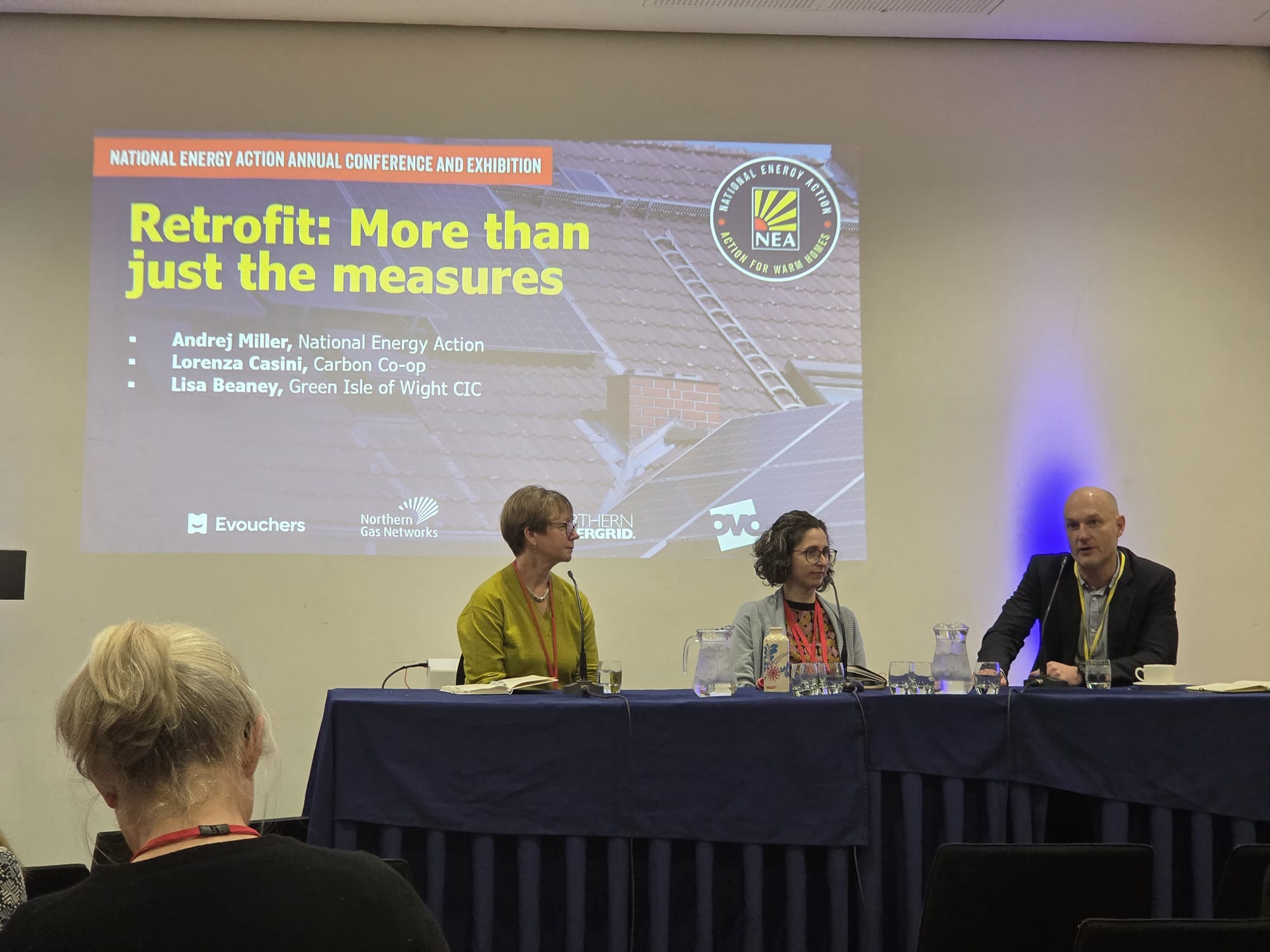 |
14.00-15.15 Retrofit: More than just the measures In this breakout session, Lorenza Casini from Manchester-based Carbon Co-op, dispelled some myths, including the idea that vulnerable residents don’t care about the environment. However, for people who just want to live in a warm, safe home, carbon reduction may simply be a side-effect for them when reducing their bills. Lisa Beaney, from Green Isle of Wight CIC finds “carbon” doesn’t resonate with her residents, and focuses instead on making homes warm. She agrees that what is needed to achieve national retrofit and Net Zero targets, is high quality, in-home energy and retrofit advice. She went on to say these expert advisors need to be independent, not the Council, and not the Housing Association. |
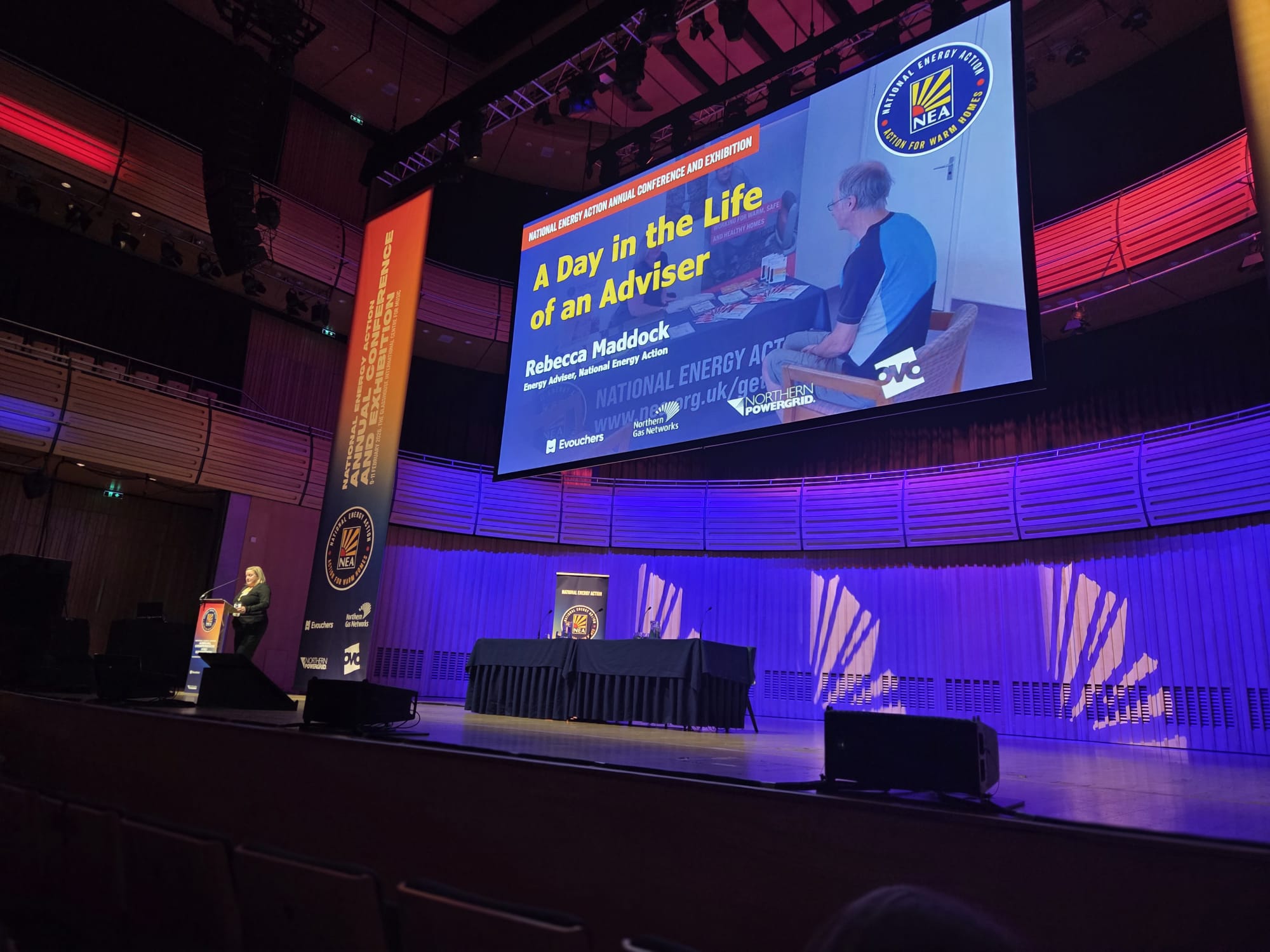 |
15.45-15.50 Spotlight on: A day in the life of an adviser Rebecca Maddock is one of NEA’s Energy Advisors, and just like our team of friendly experts, she spends a great deal of her time speaking with vulnerable residents living through horrendous situations. The advice is mainly provided over the telephone, and the client has one named casework advisor, who will stay with them until the situation is resolved. |
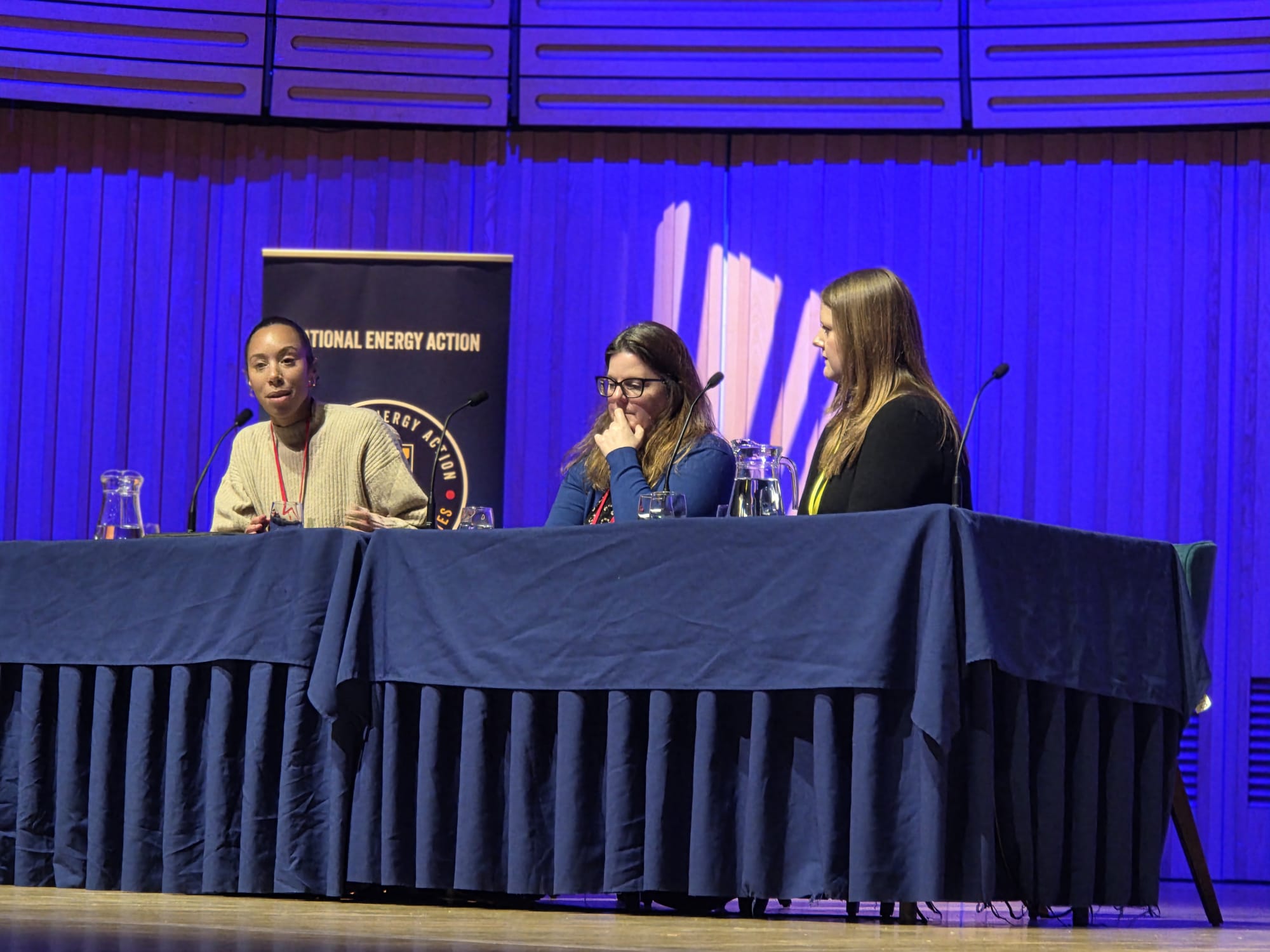 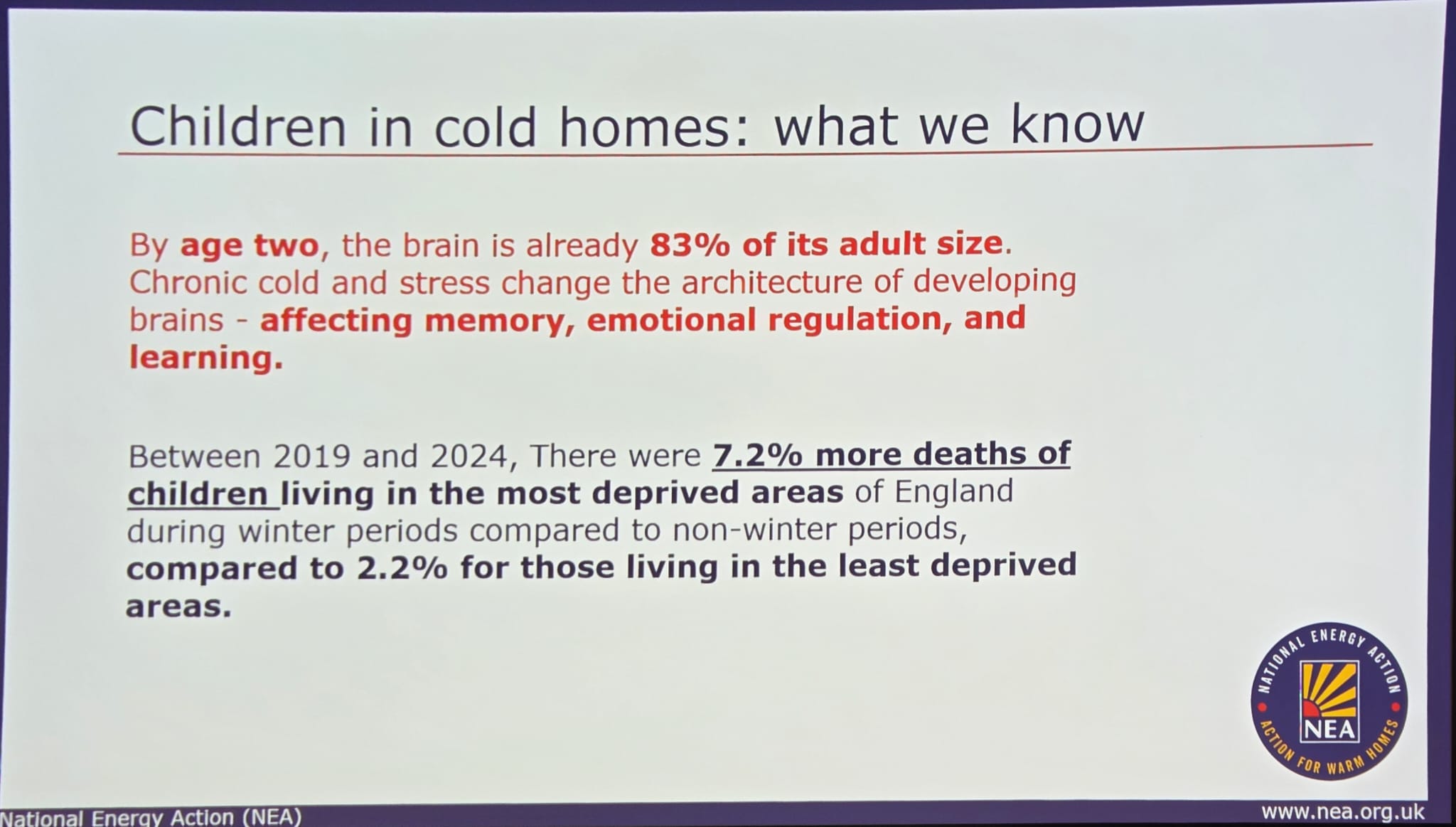 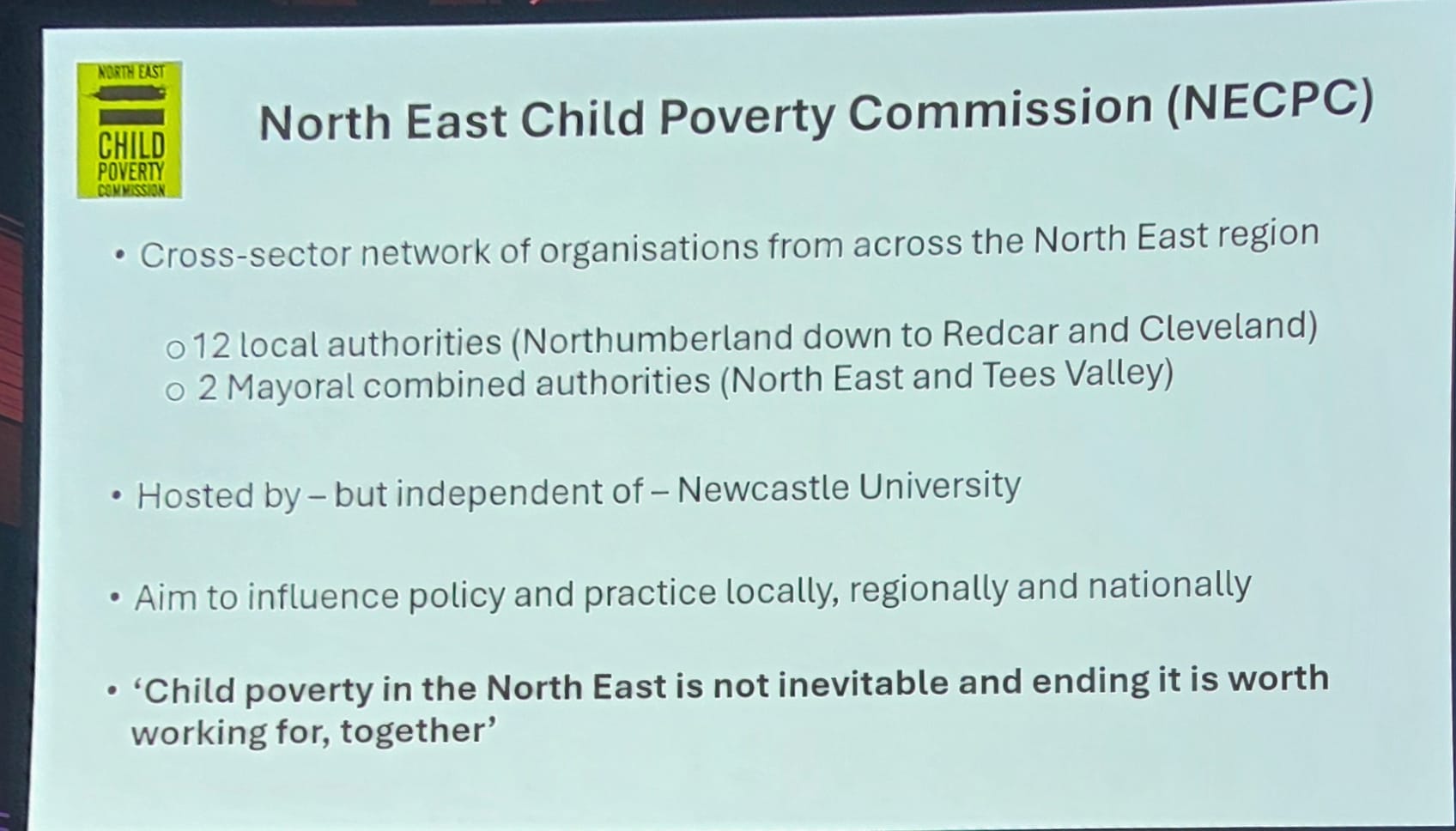 |
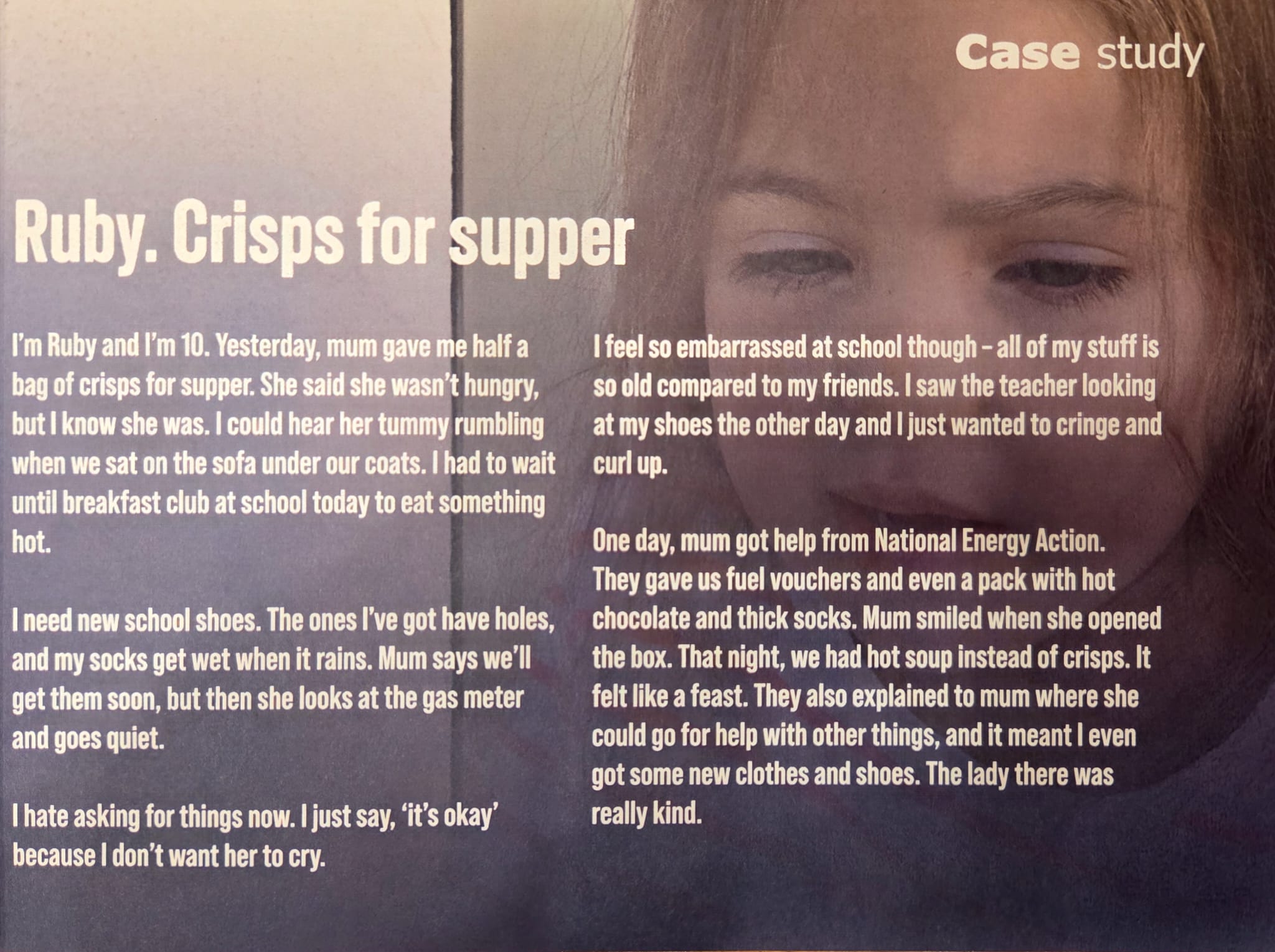
15.50-16.50 Little lives, big struggles: The hidden toll of fuel poverty on children This session carried a trigger-warning, as the discussion included mentions of self-harm, and details of children suffering in cold, damp homes. We heard case studies from children who had engaged with NEA and provided their lived experience, and we came away with the headline “fuel poverty = child poverty = poverty” for us all to remember in our daily work.
|
Wednesday morning overview
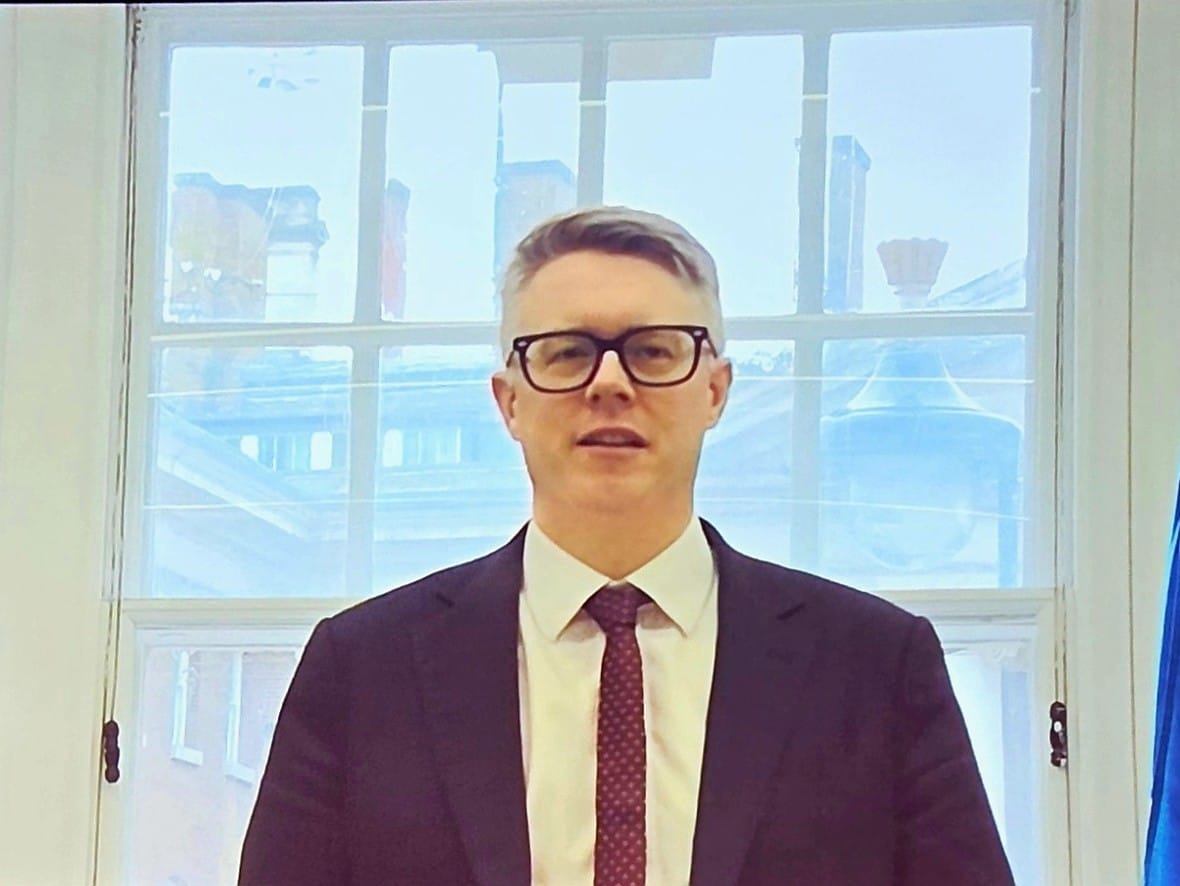 |
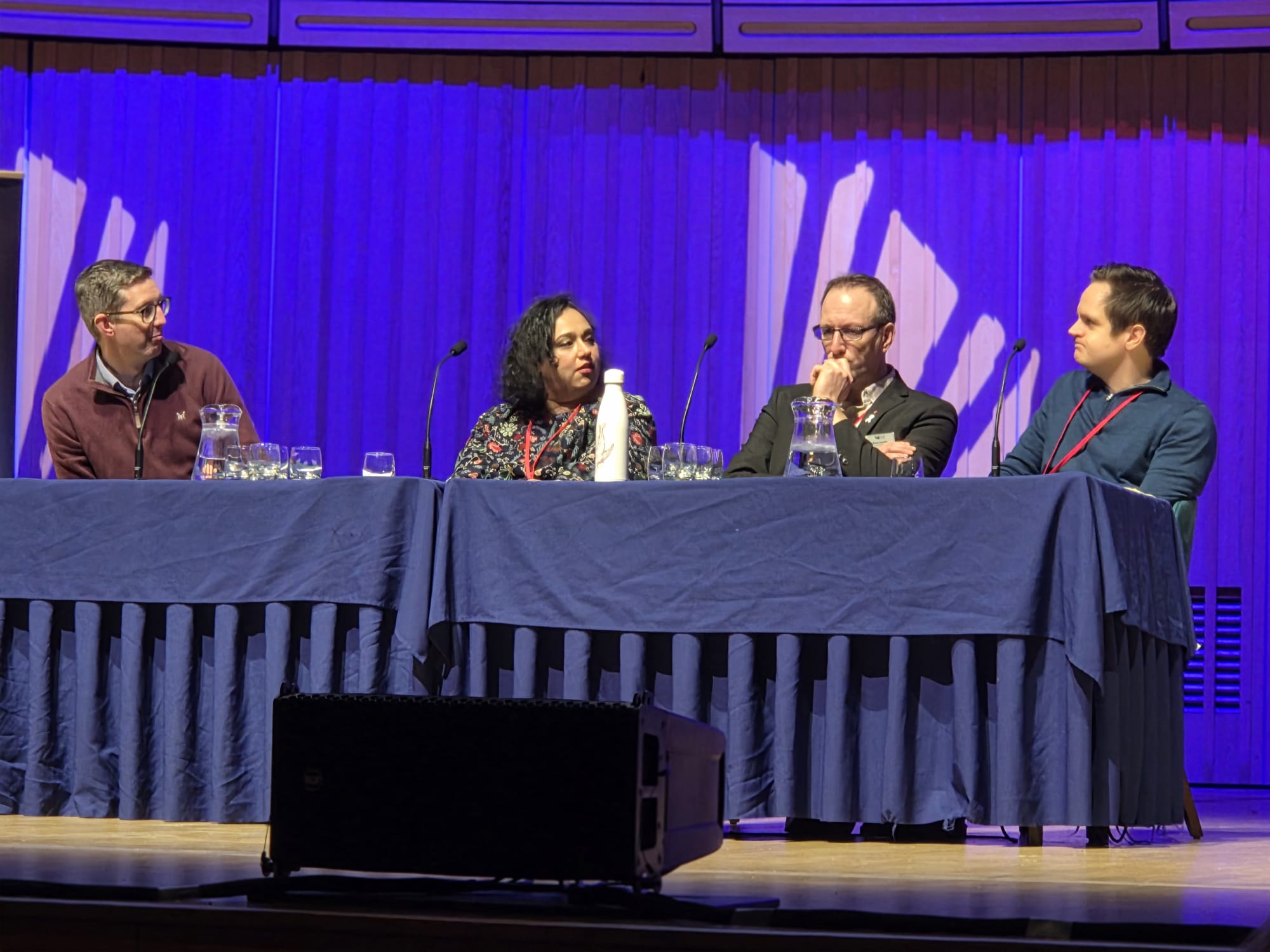
09.30-10.10 Session 5: Ministerial Address Martin McCluskey MP, Minister for Energy Consumers, joined us via video-link, to address the audience and outline the three forms of action being taken by government:
Adam Scorer read out some questions that had been posed by delegates ahead of the conference, including: Q) How do we prioritise children and patients with chronic health conditions? A) The changes we’re making will have a positive impact on their lives. |
 |
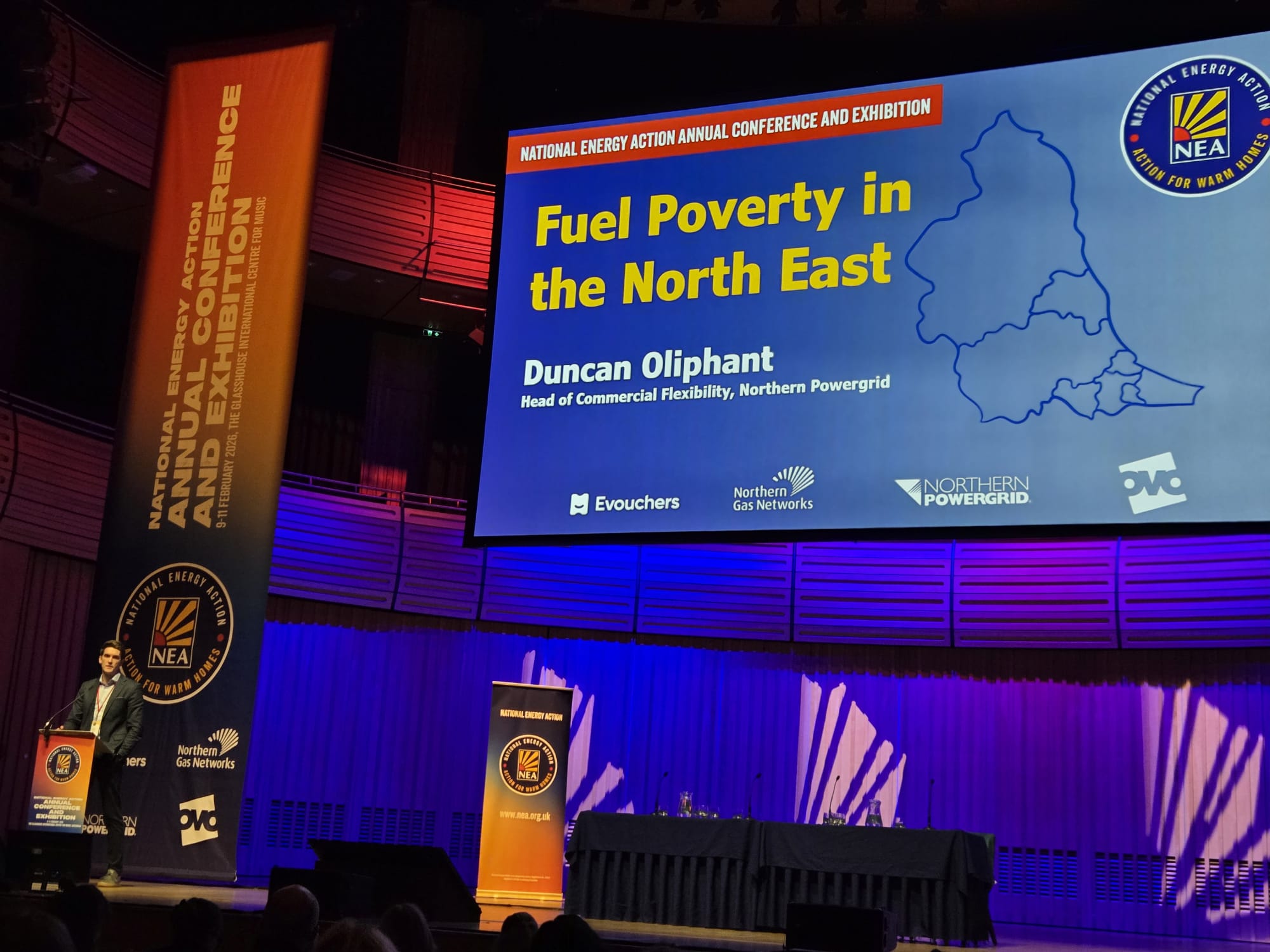
10.10-11.10 Shaping regional solutions to fuel poverty This session focused on how different Combined Authorities are approaching their Warm Homes Local Grant schemes |
 |
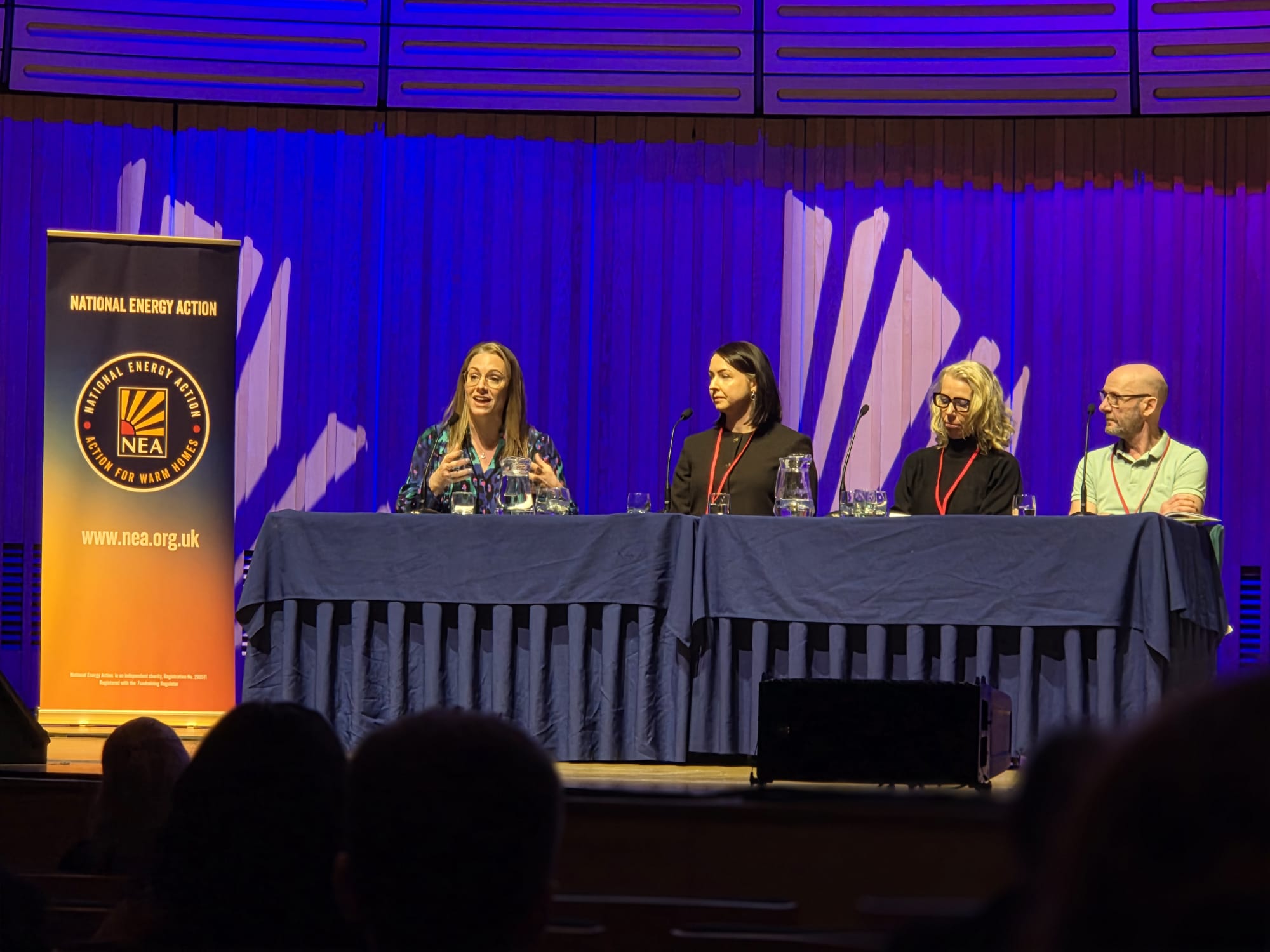
12:00-12.10 Spotlight on: Fuel poverty in the North East Duncan Oliphant made clear that there’s no one-size-fits-all approach that works to tackle fuel poverty. The challenges faced in the North East may be similar to those elsewhere, but they can also be very different. |
 |
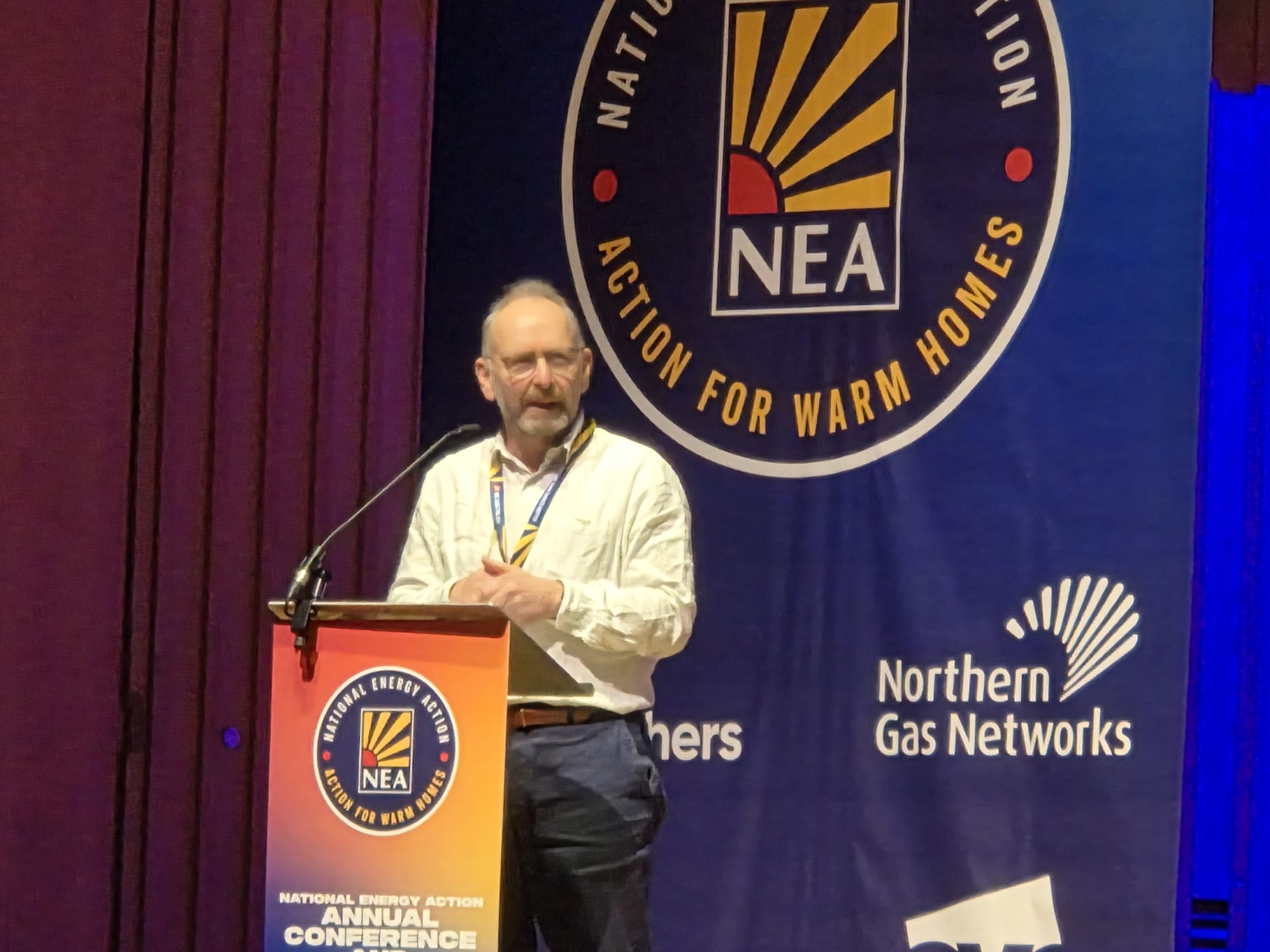
12.10-12:50 Session 7: Partners’ panel We spent quite a while debating social tariffs, as so many of us in the room work with vulnerable residents who would be glad of any additional, financial support with their bills. While I would happily welcome a new, additional social tariff, I’ve been around long enough to remember when we did have social tariffs for energy: Each energy supplier could choose their own eligibility, and the support they wished to offer. OFGEM decided to regulate them, so there was one standard offer. This came with a new name, “Warm Home Discount” and it’s now been around for 15 years, knocking £150 off the annual bills of vulnerable customers. |
 |
12:50-13.30 Final remarks Adam Scorer provided a short reflection on the conference. We’ve received the Warm Homes Plan, the revised Fuel Poverty Strategy, and the Child Poverty Strategy. Now we’re all moving together, from strategy to delivery. |
As reported by BBC, the UK’s first geothermal power plant has been turned on, providing a completely new type of renewable electricity using hot water from underground.
On Thursday morning, the Cornish plant will be switched on after nearly two decades in development which required Geothermal Engineering Ltd (GEL) to drill the deepest on-shore well in the UK.
The water, super-heated by rocks, will help drive turbines to generate electricity for 10,000 homes, but will also provide the UK’s first domestic supply of lithium – a critical mineral used in green technology.
The British Geological Survey said it was a “major step forward” for geothermal but high drilling costs could make replicating the project difficult.
The Earth generates heat which can be harnessed by drilling down below the surface to provide a renewable, and continuous source of energy to heat and power our homes – known as geothermal energy.
This project has drilled three miles below the surface – where temperatures climb to nearly 200C, and this is enough heat to generate electricity.
“You drill deep boreholes into the ground, and then fractures within the granite rock are used to circulate the water that pick up the heat [that is] used for electricity production,” explained Dr Monaghan, head of geothermal at the British Geological Survey (BGS).
Granite is particularly ideal for this technology as it is very effective at holding and conducting the Earth’s heat.
This is the first time the feat has been achieved in the UK because drilling this far down is a technically and financially costly endeavour. The project has cost £50m to date, funded through private investors and the EU.
Ryan Law, CEO of GEL, told the BBC:
“[I’m] tremendously excited after 15 years of hard graft, difficulties, we’re finally there.”
He said geothermal power was “really important” for the UK because there are no price fluctuations like with gas.
“And unlike other renewable sources like wind and solar we are constantly on, 24/7 electricity,” he added.
The power generated at the United Downs site has been sold to Octopus Energy who will deliver it, via the national grid, to meet the electricity needs of up to 10,000 homes.
“This project is a genuine game-changer. For the first time, we’re tapping into “always-on” green power in the UK, providing a steady stream of clean, home-grown energy,” said an Octopus spokesperson.
OFGEM has today (25th Feb) confirmed the average costs for gas and electricity will drop by 7%, or approximately £10 per month, from the 1st of April. You can read their press release by clicking here.
These price announcements are released every 3 months, and are calculated by reviewing wholesale costs, as well as the cost of supplying energy to us. OFGEM then sets a Price Cap that energy suppliers mustn’t exceed, for any customers who are on a variable rate tariff.
The drop announced today has largely been possible due to the Chancellor announcing in her Autumn budget, that some of the costs added to bills to pay for schemes, would be removed, with a stated intention to reduce everybody’s bills by £150 from the 1st of April this year. This means even customers who are already on a fixed deal should see their bills drop, as the relevant costs are removed from their bills too.
Today’s announcement shows we won’t see the full benefit of the £150 reduction, as there has been a rise in network costs, which are passed on to billpayers. This means, without the Chancellor making those changes, our bills would likely have risen in April.
The average costs tend to be true for a small family living in a 3 bedroom, semi-detached house, built after 1930. How much you will actually pay depends on how much energy you use, and we’d urge everybody to read their energy bills to see how many kilowatt hours (kWh) they are estimated to use annually. The national averages are 2,700kWh for electricity, and 11,700kWh for gas. If you’re using more than this, then it’s possible you could be wasting energy, and might benefit from adapting your behaviours to use less (you can use a smart meter to monitor this) and/or ensure you’re using any heating controls to save on waste (as heating our homes is the most costly thing we use energy for), and/or checking to see whether you could install energy efficient measures such as increased insulation, more efficient heating, or even renewable energy technologies.
Residents of Cheshire, Merseyside, and West Lancashire with questions about any of the above, are welcome to call our Save Energy Advice Line free on 0800 043 0151, or email advice@epplus.org. Lines are open 9am-5pm, Monday-Friday.
A project to reduce the impact of fuel poverty on vulnerable people is being promoted nationally as an example of how to tackle health inequalities.
Health Innovation North West Coast has led the scheme in Cheshire and Merseyside which has focused on adults with chronic obstructive pulmonary disease (COPD) and children with pre-school wheeze.
It uses insights derived from data to coordinate services for people whose condition may be exacerbated by living in cold homes.
A poster that explains the work has now been adopted as part of NHS England’s Core20PLUS5 approach to reducing healthcare inequalities.
It illustrates how the programme brought together partners from the NHS, local government and the voluntary sector to deliver the scheme, and how up to 450,000 households in the region are affected by fuel poverty.
The programme used data insights to target individuals who would benefit most from an intervention and to coordinate resources across the various sectors without having to introducing new services.
The poster also underlines the scheme’s impact, including a 10 per cent reduction in GP appointments among the target group of patients living in St. Helens.
The work was submitted to the National Healthcare Inequalities Improvement Programme by Rhiannon Clarke, Senior Programme Manager at Health Innovation North West Coast in her role as a Core20PLUS5 ambassador.
Rhiannon is one of two Core20PLUS5 ambassadors at Health Innovation North West Coast. The other is Public Involvement Lead Debbie Parkinson.
Rhiannon said:
“The role of the Core20PLUS5 ambassadors is to share their experiences with colleagues so we can push health equalities up the agenda together.
“I’m really pleased with the outcome of the work we’ve done locally to mitigate the impact of fuel poverty on some of the most vulnerable people in our communities.
“That’s why I’m doubly pleased to share it with colleagues in other parts of the country who may be able to learn something from what we’ve done to narrow the inequality gap in their areas.”
Sara Javid, Senior Manager Strategic Partnerships – Healthcare Inequalities, NHS England, said:
“Rhiannon has successfully shown how data-led population health management and Core20PLUS5 targeting can translate into earlier intervention for people most at risk.
“Rhiannon’s work is an excellent example of prevention in practice. She has shown us that connecting existing services around a shared population health intelligence approach can strengthen early identification, improve coordination across partners and demonstrate real value for both communities and the health and care system.
“One of the key strengths of this model is the quantifiable outcomes that Rhiannon has measured both in saving GP appointment time and economic savings. This is a scalable, evidence-informed model that supports integrated care systems to embed proactive, place-based action and deliver sustainable improvement in outcomes for those who need it the most.”
Read more on Health Innovation North West Coast’s website about how data is driving the fuel poverty mitigation project.
This is the news many in the sector have been waiting for and we welcome the Government publishing its Warm Homes Plan, first announced in 2024.
The Warm Homes Plan commits £15bn over the next five years to upgrading homes across the UK, alongside introducing new rights and protections for renters. Its stated goals are to tackle fuel poverty, reduce bills, and accelerate the rollout of clean heating and energy efficiency measures.
A major new element is the offer of low and zero-interest loans for “able to pay” households to support the uptake of technologies such as heat pumps, solar panels and batteries.
Below is what we know so far and what remains unclear.
The funding: £15bn split into two main pots
£5bn for low-income households
£5bn is ringfenced for low-income households, who will be able to access direct support to make their homes warmer, healthier and cheaper to run.
Depending on the property and household, this could mean partially or fully funded whole-home retrofits. For some homes, this might include packages such as solar PV and a battery (often costing in the region of £9,000–£12,000), alongside other measures.
£10bn for infrastructure and “able to pay” households
The remaining £10bn will be split between:
- Investment in delivery infrastructure and skills, and
- Low- and zero-interest loans for “able to pay” households to install clean energy technologies.
The government has said this funding will also support the creation of thousands of well-paid, future-proofed jobs in energy efficiency and clean heating by 2030. This is a critical point: scaling up delivery capacity, skills and local supply chains is essential if the UK is to move from small, stop-start schemes to mass retrofit.
The “able to pay” market: a big opportunity, but big unanswered questions
The loan offer could help many households who have previously been “just outside” eligibility for grants, or for those who want to improve the energy efficiency of their homes but cannot afford the upfront cost.
However, key details are still missing:
- Who will provide the loans?
- How will households apply?
- What will the interest rates and repayment terms be?
- What consumer protections will apply?
There is also a real risk that if repayment periods are short or terms are unattractive, some households will still be unable to access support, while also not qualifying for grant funding, leaving them stuck in inefficient homes as energy prices continue to fluctuate.
Where is insulation in the headline offer?
One noticeable feature of the press coverage is the heavy emphasis on technologies (heat pumps, solar, batteries) and much less emphasis on fabric improvements.
There is no clear mention of grant support for “able to pay” households specifically for insulation in the main announcements, even though insulation and draught-proofing are listed in the eligible measures.
This matters because:
Heat pumps and low-carbon heating perform well in homes with low heat loss.
In a poorly insulated home, heat escapes through walls, roofs, floors and draughts. That means:
- The heating system runs more
- The home is harder to keep warm
- Running costs are higher than expected
In the worst case, you risk ending up with a fuel-poor household in a cold, draughty home – just with a heat pump or solar panels added.
New protections for renters
The government has also highlighted new and stronger protections for renters.
Currently, around 1.6 million children in the UK live in fuel-poor homes that are cold, damp or mouldy. The Plan commits to improving standards in both the private and social rented sectors and making sure landlords take responsibility for providing homes that are safe, warm and affordable to run.
However, we do not yet know:
- What the new minimum standards will be
- The timeline for compliance
- What support will be available to landlords
- What enforcement mechanisms will be used
The Warm Homes Agency: a major structural reform
One of the most important announcements is the creation of a Warm Homes Agency.
The new Agency is intended to act as a single national delivery body responsible for:
- Advice and guidance
- Access routes
- Quality assurance
- The end-to-end customer journey
- Combining functions from multiple existing bodies
- Reducing duplication, admin burden, and stop-start funding cycles
Local delivery model
The Plan also signals a shift towards greater local and regional control, with mayors and local leaders playing a stronger role in delivery.
This suggests:
- More area-based programmes
- More strategic, long-term delivery contracts
- Less short-term competitive bidding and funding cycle
Confirmed list of eligible measures
The government has confirmed that schemes will cover:
- Solar panels (PV and solar thermal)
- Heat pumps (air source, ground source, including air-to-air)
- Home and heat batteries
- Smart controls
- Insulation (wall, floor and roof)
- Draught-proofing
Risks, unknowns, and what to watch
While the Warm Homes Plan sets a long-term direction and represents a major step forward in funding scale and ambition, many critical delivery details are not yet published.
The creation of the Warm Homes Agency strongly suggests the government intends to improve quality control and customer outcomes – but the technical rules, sequencing and standards have not yet been set out.
Conclusion: the direction is laid out, the detail is not (yet)
The Warm Homes Plan sets a strategic direction of travel: towards mass, long-term, whole-home retrofit delivered at scale.
However, many of the most important delivery rules, technical standards and access routes are still to come and will likely emerge later this year.